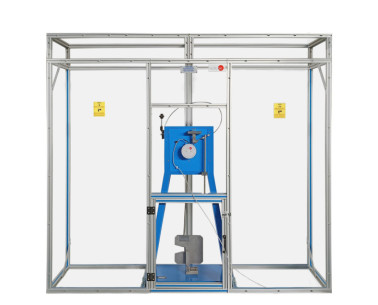
Materials engineering is the scientific and industrial branch responsible for making an industrial interpretation of materials science. Anthropologically, the different stages of human development have been classified according to the materials used in the manufacture of tools (Stone Age, Bronze Age, etc.). Thus, the development of humanity is intimately linked to the study of new materials.
During the last 200 years, discoveries about materials, so revealing as the contribution of Gibbs, have been made. He demonstrated the existence of a relationship between the properties of a material and its structure. These discoveries have allowed the development of new materials, such as graphene, and the investigation of new fields, such as nanomaterials or nanotechnology.
A huge number of tests have been carried out to reach that level of development, including mechanical bending tests, hardness tests (Rockell, Brinell, Vickers, Martens), torsion tests, tensile test (toughness and resilience), tensile testing (creep), shear testing, as well as chemical tests (thermal treatments, internal structures, etc.). Likewise, materials can be classified as:
- Metals (ferrous and non-ferrous).
- Ceramics.
- Polymers (thermoplastics, thermosetting plastics and elastomers).
- Composite materials.
The applications of these advances are evident in different industrial areas, such as the automotive, electronic, aerospace, aeronautic and biomedical ones, thus giving to materials engineering the importance it has in today's society.
 Cookie preferences