2.- ELECTRONICS

Electronics is the branch of physics focused on the behavior of electrons. In engineering, electronics is the part that studies and develops electronic circuits so that the electrons circulating through them have the behavior required by the specifications of the application.

View more

Electronics has been one of the most developed disciplines throughout the 20th century, going from having a very limited application as power supplies to having a great impact on society. Some examples of key electronic applications to understand this great influence are the sensors and meters of all kinds of physical quantities such as pressure level, flow level and temperature measurement, the use of electronic amplifiers and filters, the development of integrated circuits, microprocessors and personal computers, the development of transistors of different technologies such as MOSFET, JFET, BJT, IGBT, etc.

Electronics applications are almost endless, and new contributions are improved and added each year. Depending on the application of the electronic circuits the following groups are differentiated: analog electronics and digital electronics depending on whether binary or analog signals are used, power electronics depending on whether high electric currents and electric voltages are used, electronic instrumentation depending on whether they are used to make electronic measurements of physical quantities, etc.

The future of electronics focuses on the miniaturization of electronic components, increasing their efficiency and speed. In this work, the discovery of revolutionary new materials, such as graphene or silicene, is of key importance.

View Products
Related Materials
ELECTRONICS SUBCATEGORIES

2.1.- POWER SUPPLIES, MEASUREMENT EQUIPMENT AND ACCESSORIES

The electronic laboratory equipment is the set of instruments required to carry out the experimentation in a practical session of electronics. The characteristics of the equipment will depend on the theoretical level of the laboratory to be equipped, whether it is a technical high school, a...
View

2.2.- KITS FOR CIRCUITS ASSEMBLY

The electronic development phase of a device is a group of stages carried out to obtain a product that meets the required specifications.The most characteristic stages of any electronic device development are: defining the equipment specifications, designing the different electronic circuits that...
View

2.3.- THEORETICAL - PRACTICAL FUNDAMENTALS

The electronics fundamentals are the set of knowledge aimed at providing the student with a solid base to analyze and understand the general operation of the most common electronic circuits, and the individual function of the electronic components that compose them.Acquiring a good theoretical...
View

2.4.- INDUSTRIAL ELECTRONICS

Industrial electronics is a branch of electronic engineering that focuses on industrial-grade electronic systems. One of the most important branches of industrial electronics is power electronics, which is responsible for the development of electronic applications that control and regulate high...
View

2.5.- AUTOMOTIVE ELECTRONICS

Automotive electronics is the branch of electronic engineering focused exclusively on the development of electrical and electronic systems specially designed to be installed in the car. All the systems developed in automotive electronics are adapted to withstand the harsh operation conditions in...
View

ELECTRONICS EQUIPMENT

Showing 85-96 of 123 item(s)
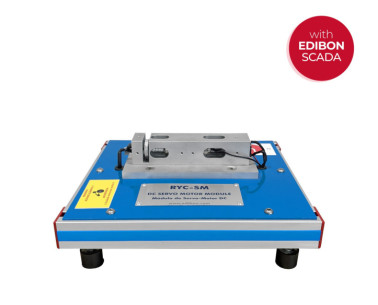
PID CONTROL AND REGULATION OF A DC SERVOMOTOR UNIT - RYC-SM
Available
6.1.1.1.- THEORETICAL-PRACTICAL FUNDAMENTALS

RYC-SM

PID Control and Regulation of a DC Servomotor Unit

Accessory of RYC, RYC/T
The PID Control and Regulation of a DC Servomotor Unit, "RYC-SM", designed by EDIBON, allows studying speed and position control in a DC servomotor. It includes speed and position sensors, allowing analysis of the dynamic response of the motor and...
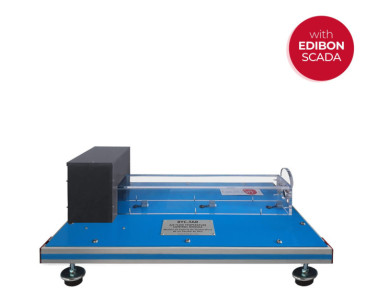
PID TEMPERATURE CONTROL AND REGULATION OF AIR FLOW UNIT - RYC-TAR
Available
6.1.1.1.- THEORETICAL-PRACTICAL FUNDAMENTALS

RYC-TAR

PID Temperature Control and Regulation of Air Flow Unit

Accessory of RYC, RYC/T
The PID Temperature Control and Regulation of Air Flow Unit, "RYC-TAR", designed by EDIBON, allows studying temperature control in an air flow using a fan and a heating element. It includes sensors distributed along the duct, allowing analysis of...
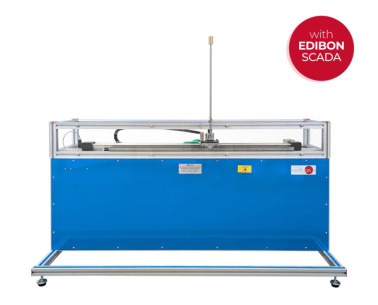
PID CONTROL AND REGULATION OF AN INVERTED PENDULUM UNIT - RYC-PI
Available
6.1.1.1.- THEORETICAL-PRACTICAL FUNDAMENTALS

RYC-PI

PID Control and Regulation of an Inverted Pendulum Unit

Accessory of RYC, RYC/T
The PID Control and Regulation of an Inverted Pendulum Unit, "RYC-PI", de­signed by EDIBON, allows studying a highly unstable process through the control of an inverted pendulum mounted on a moving carriage. It includes position and angle sensors...
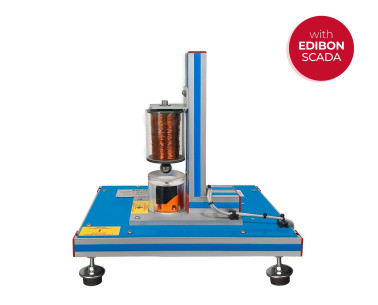
PID MAGNETIC LEVITATION CONTROL AND REGULATION UNIT - RYC-CLM
Available
6.1.1.1.- THEORETICAL-PRACTICAL FUNDAMENTALS

RYC-CLM

PID Magnetic Levitation Control and Regulation Unit

Accessory of RYC, RYC/T
The PID Magnetic Levitation Control and Regulation Unit, "RYC-CLM", desig­ned by EDIBON, allows studying a highly nonlinear process through the levitation of a metallic ball using an electromagnet. It includes position and current sensors that...
PID TEMPERATURE CONTROL AND REGULATION UNIT - RYC-TE
Available
6.1.1.1.- THEORETICAL-PRACTICAL FUNDAMENTALS

RYC-TE

PID Temperature Control and Regulation Unit

Accessory of RYC, RYC/T
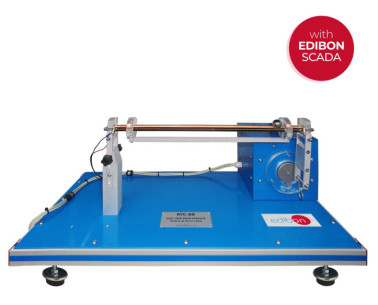
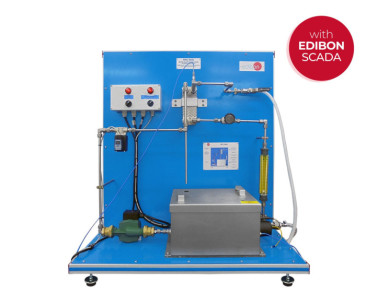
The PID Temperature Control and Regulation Unit, "RYC-TE", designed by EDI­BON, allows studying temperature control in a tank using a heating element and temperature sensors. It allows analyzing thermal dynamics, response time, and process stability.
PID CONTROL AND REGULATION OF PRESSURE LEVEL UNIT - RYC-P
Available
6.1.1.1.- THEORETICAL-PRACTICAL FUNDAMENTALS

RYC-P

PID Control and Regulation of Pressure Level Unit

Accessory of RYC, RYC/T
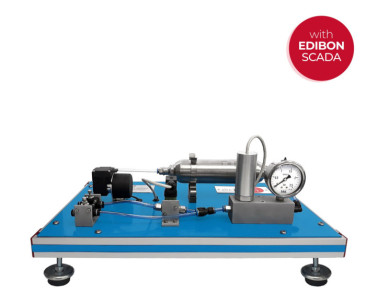
The PID Control and Regulation of Pressure Level Unit, "RYC-P", designed by EDIBON, allows the study of pressure control in a tank using compressed air. It includes a compressor, pressure sensors, and control valves. It allows analyzing the...
PID LEVEL CONTROL AND REGULATION UNIT - RYC-N
Available
6.1.1.1.- THEORETICAL-PRACTICAL FUNDAMENTALS

RYC-N

PID Level Control and Regulation Unit

Accessory of RYC, RYC/T
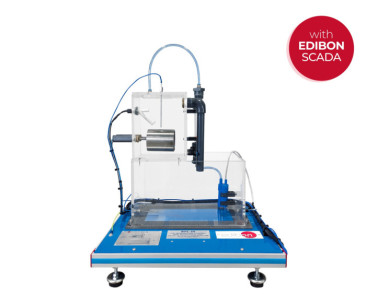
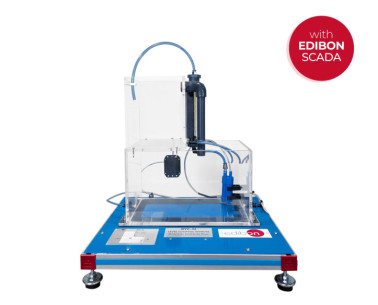
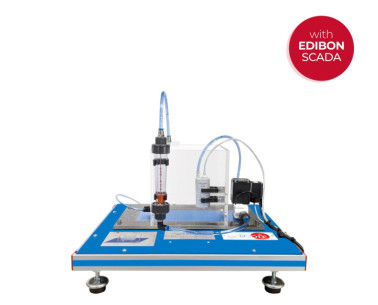
The PID Level Control and Regulation Unit, "RYC-N", designed by EDIBON, allows studying level control in a tank by regulating the inlet flow. It includes level sensors, a pump, and valves that allow modifying operating conditions. The unit allows...
PID FLOW CONTROL AND REGULATION UNIT - RYC-C
Available
6.1.1.1.- THEORETICAL-PRACTICAL FUNDAMENTALS

RYC-C

PID Flow Control and Regulation Unit

Accessory of RYC, RYC/T
The PID Flow Control and Regulation Unit, "RYC-C", designed by EDIBON, allows the study of flow control in a closed hydraulic circuit. It includes a pump, a flowmeter, and an electronic proportional valve that regulates the flow. The unit allows...
PID CONTROL AND REGULATION OF LIGHT INTENSITY UNIT - RYC-I
Available
6.1.1.1.- THEORETICAL-PRACTICAL FUNDAMENTALS

RYC-I

PID Control and Regulation of Light Intensity Unit

Accessory of RYC, RYC/T
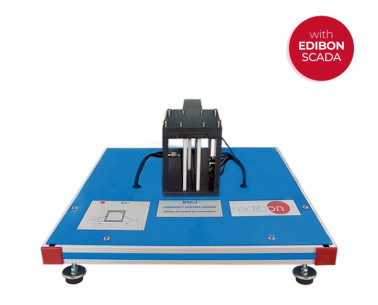
The PID Control and Regulation of Light Intensity Unit, "RYC-I", designed by EDIBON, allows analyzing light intensity control in a closed environment. It includes a variable light source and several optical sensors, such as photodiodes or...
Ask for information