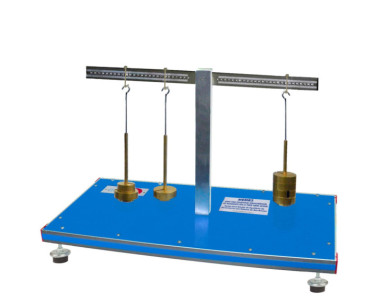
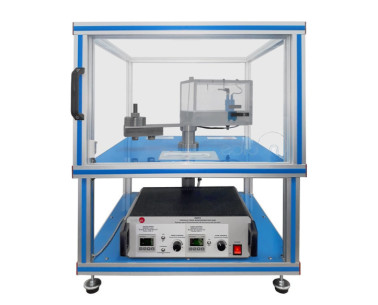
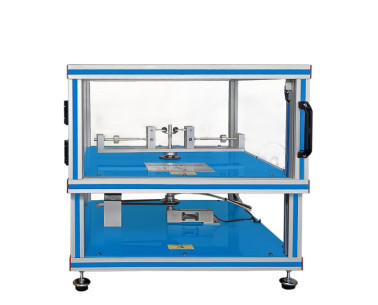
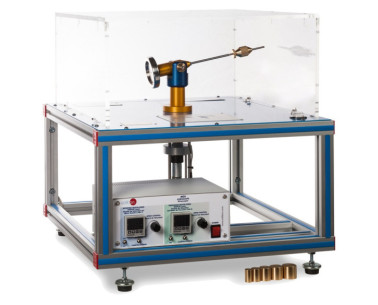
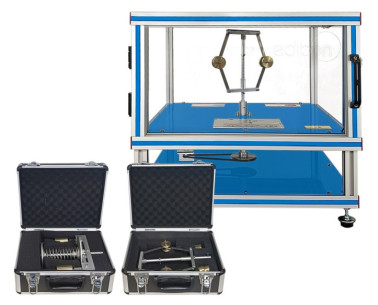
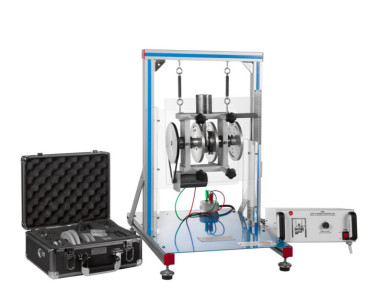
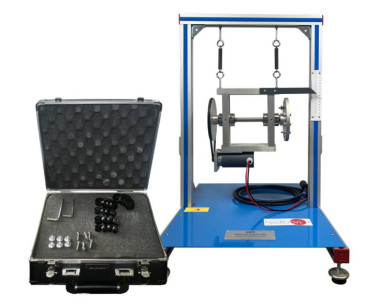
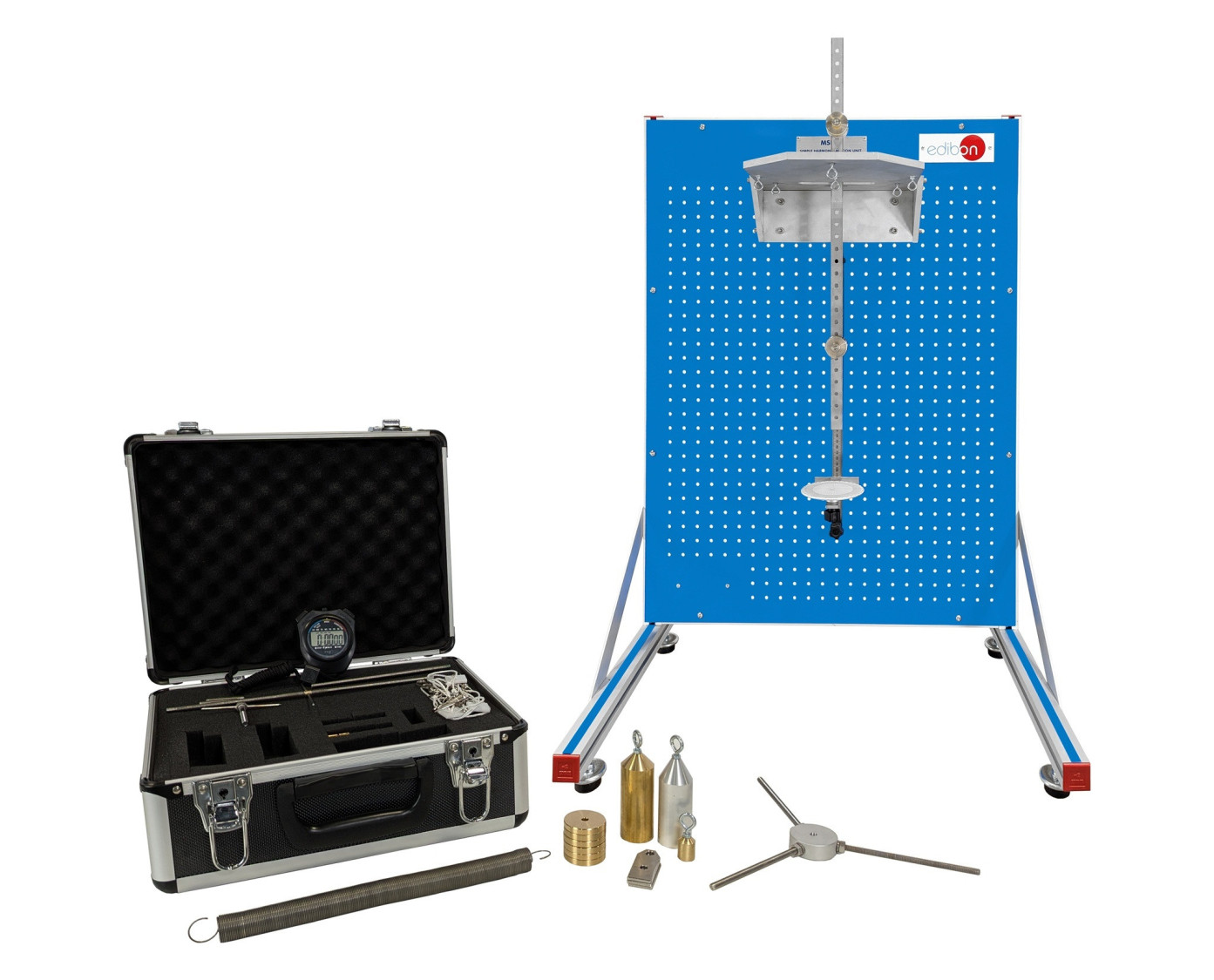
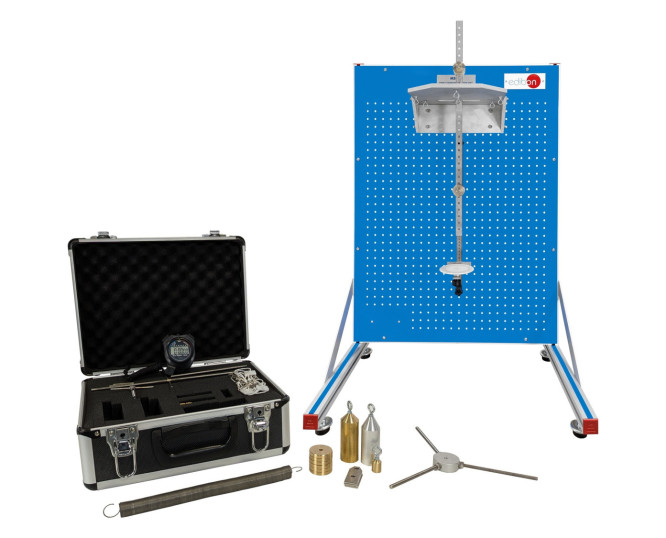
The Simple Harmonic Motion Unit, "MSHU", has been designed by EDIBON for the experimental study of simple harmonic motion through the observation of different oscillatory systems.
This unit allows the practical analysis of the periodic motion of pendulums and springs, facilitating the understanding of the relationship between displacement, restoring force, and oscillation period. Its use enables the evaluation of the influence of variables such as mass and length on system dynamics, making it suitable for both training and experimental applications.
The unit consists of a panel with a support that allows suspending different study elements, including a simple pendulum, bifilar pendulum, trifilar pendulum, Kater pendulum, and springs.
Operation consists of allowing free oscillation of the different elements, enabling period measurement and analysis of how various parameters affect the motion. The oscillation length can be easily modified using tensioners, facilitating comparative studies between different configurations.
The Kater pendulum allows establishing the relationship between simple harmonic motion and gravitational acceleration, enabling its accurate experimental determination.
Additionally, the unit allows comparison between experimental results and theoretical predictions, facilitating the validation of physical models and the understanding of real oscillatory behavior.
 Cookie preferences

 Catalog
 Tender Specifications