RYC/T Computer Controlled Modular Control and Regulation Unit

COMPUTER CONTROLLED MODULAR CONTROL AND REGULATION UNIT - RYC/T

創新系統

The Computer Controlled Modular Control and Regulation Unit, with SCADA and PID Control, "RYC/T", has been designed by EDIBON to study the principles of regulation and automatic control, allowing the analysis of the behavior of different processes and the application of PID controllers and compensators under real conditions.

查看一般說明

相關新聞

一般說明

The Computer Controlled Modular Control and Regulation Unit, with SCADA and PID Control, "RYC/T", has been designed by EDIBON for the study of regulation and automatic control through experimentation with real processes and dynamic models. It allows analyzing the behavior of integrator, first-order, and second-order processes, as well as their response to setpoint changes and disturbances, facilitating the understanding of aspects such as stability, response time, steady-state error, and parameter adjustment through the use of PID controllers and lead-lag compensators, both for training and research.

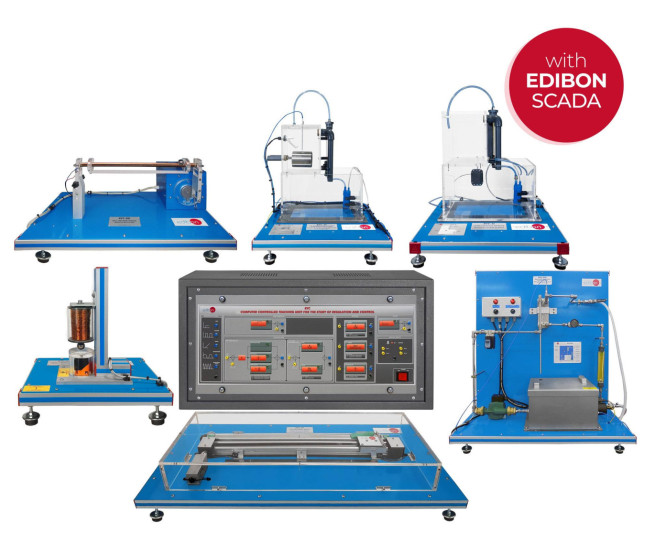
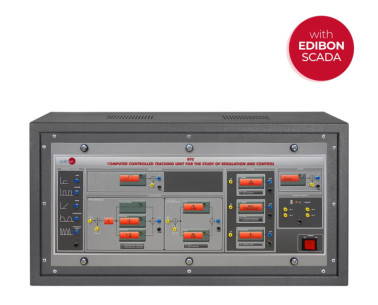
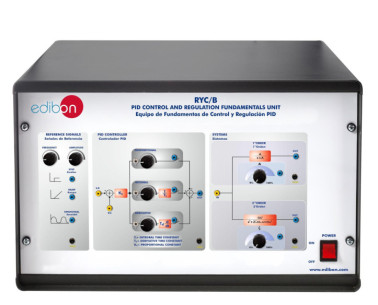
  • RYC.Computer Controlled Teaching Unit for the Study of Regulation and Control (PC).This unit is common to all "RYC" type unit and constitutes the base unit for performing regulation and automatic control practices. It is organized into different functional sections that allow a complete study of the dynamic behavior of processes. These include reference signal generation (step, ramp, sinusoidal, etc.), the PID controller with proportional, integral, and derivative actions, the lead-lag compensator, disturbance insertion, and process modeling sections, which allow representing integrator, first-order, and second-order behaviors, whose parameters are adjustable through the software.
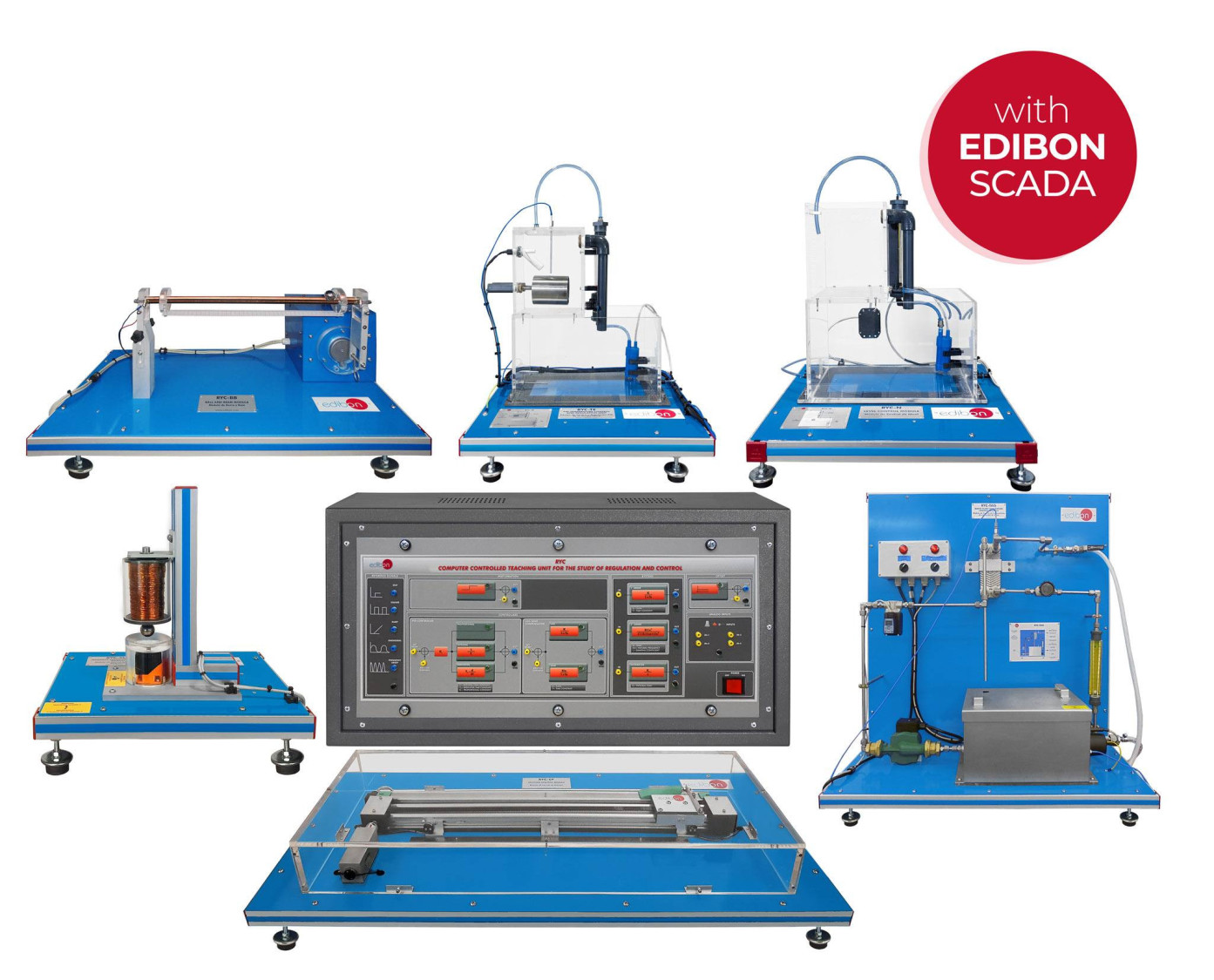
  • The unit also includes auxiliary sections such as offset input and analog inputs for signal acquisition, facilitating the configuration of different control schemes. This environment allows configuring different control strategies and visualizing the evolution of process variables in real time, facilitating comparative analysis between control methods. The different units of the "RYC/T" series are connected to this base unit, allowing work with real physical processes and complementing theoretical study with practical applications in different areas of engineering, and are as follows:

Recommended additional elements (Not included):

  • RYC-BB. PID Control and Regulation Unit of a Ball and Beam System. This unit allows the study of a classical unstable dynamic process in automatic control. It consists of a beam driven by a motor that regulates its inclination, on which a steel ball moves. The unit includes a position sensor that detects the location of the ball along the beam. The objective is to maintain the ball at a given position by continuously adjusting the angle of the beam, analyzing system stability, transient response, and behavior under disturbances.
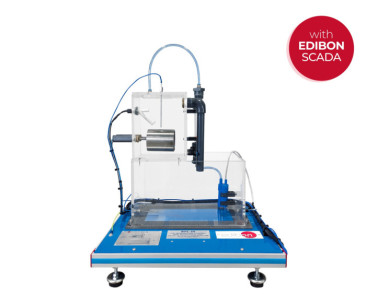
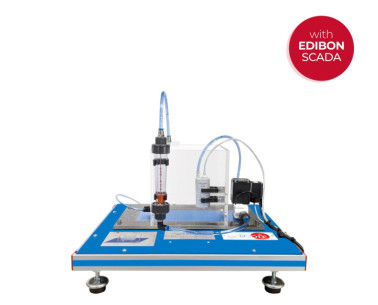
  • RYC-C. PID Control and Regulation Unit of Flow. This unit allows the study of flow control in a closed hydraulic circuit. It includes a pump, a flowmeter, and an electronic proportional valve that regulates the flow. The unit allows analyzing flow dynamics, the response of the flow to setpoint changes, and the influence of external disturbances. Phenomena such as head losses, fluid inertia, and transient behavior can be studied.
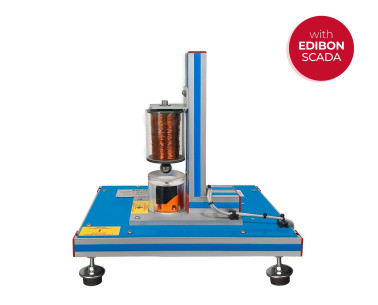
  • RYC-CLM. PID Control and Regulation Unit of Magnetic Levitation. This unit allows studying a highly nonlinear process through the levitation of a metallic ball using an electromagnet. It includes position and current sensors that allow controlling the height of the ball in the air. The unit requires continuous control to maintain stability, allowing the analysis of advanced regulation techniques and the response to disturbances in unstable processes.
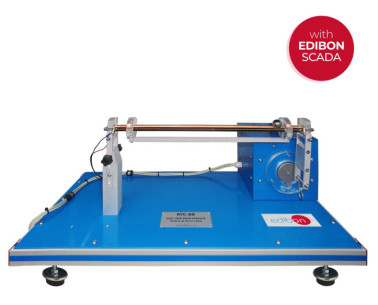
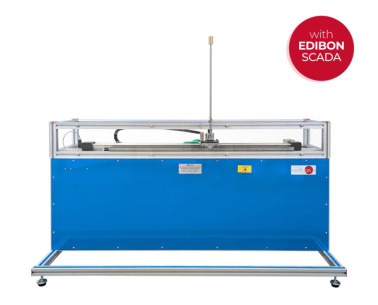
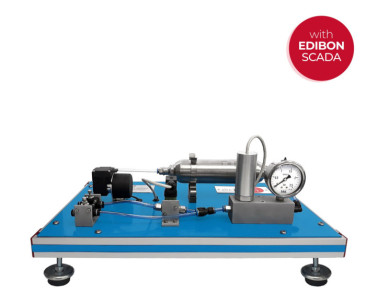
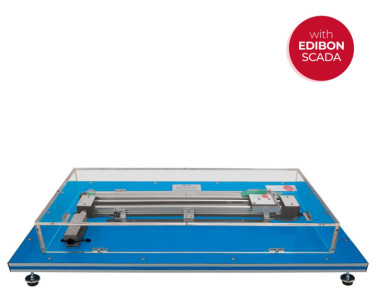
  • RYC-CP. PID Control and Regulation Unit of Motor Position. This unit allows studying linear position control using a DC motor that moves a carriage. It includes position sensors that allow measuring the displacement of the carriage. The unit allows analyzing the relationship between speed, position, and control, as well as the dynamic behavior of the motor under different controller configurations.
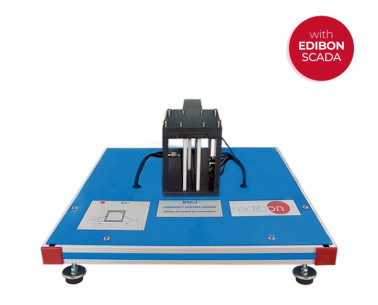
  • RYC-I. PID Control and Regulation Unit of Light Intensity. This unit allows analyzing light intensity control in a closed environment. It includes a variable light source and several optical sensors, such as photodiodes or phototransistors. It allows studying the response of different sensors to changes in illumination, as well as the regulation of light intensity using PID control.
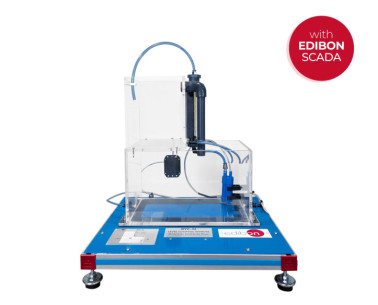
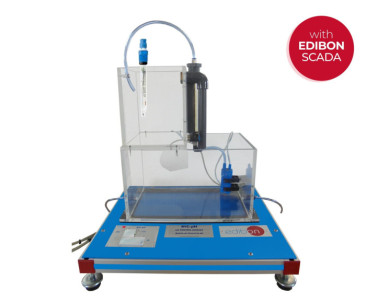
  • RYC-N. PID Control and Regulation Unit of Level. This unit allows studying level control in a tank by regulating the inlet flow. It includes level sensors, a pump, and valves that allow modifying operating conditions. The unit allows analyzing level dynamics, stability, and response to manually introduced disturbances.
  • RYC-P. PID Control and Regulation Unit of Pressure. This unit allows the study of pressure control in a tank using compressed air. It includes a compressor, pressure sensors, and control valves. It allows analyzing the behavior of compressible fluids, the response to setpoint changes, and process stability.
  • RYC-pH. PID Control and Regulation Unit of pH. This unit allows studying pH control in a tank by dosing acidic and basic solutions. It includes pH sensors, dosing pumps, and a mixing tank. It allows analyzing dynamic chemical processes and the response of the process to changes in fluid composition.
  • RYC-PI. PID Control and Regulation Unit of an Inverted Pendulum. This unit allows studying a highly unstable process through the control of an inverted pendulum mounted on a moving carriage. It includes position and angle sensors that allow controlling the balance of the pendulum. It is especially useful for analyzing advanced control and stability techniques.
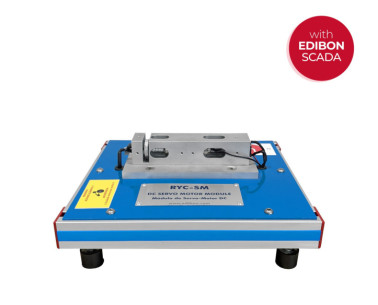
  • RYC-SM. PID Control and Regulation Unit of a DC Servomotor. This unit allows studying speed and position control in a DC servomotor. It includes speed and position sensors, allowing analysis of the dynamic response of the motor and the influence of controller parameters.
  • RYC-TE. PID Control and Regulation Unit of Temperature. This unit allows studying temperature control in a tank using a heating element and temperature sensors. It allows analyzing thermal dynamics, response time, and process stability.
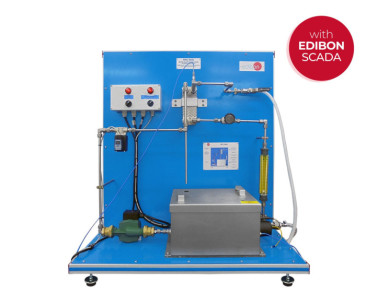
  • RYC-TAG. PID Control and Regulation Unit of Water Flow Temperature. This unit allows analyzing heat transfer in a water flow system. It includes two circuits (cold and hot water) connected through a heat exchanger. It allows studying the influence of flow rate and temperature on the thermal process.
  • RYC-TAR. PID Control and Regulation Unit of Air Flow Temperature. This unit allows studying temperature control in an air flow using a fan and a heating element. It includes sensors distributed along the duct, allowing analysis of temperature variation at different points and the response of the process to changing conditions.

This Computer Controlled Unit is supplied with the EDIBON Computer Control System (SCADA), and includes: The unit itself + a Data Acquisition Board + Computer Control, Data Acquisition and Data Management Software Packages, for controlling the process and all parameters involved in the process.

配饰

練習和指導練習

手册中包含的指导实践练习

Practical possibilities to be done with the Unit for the Study of Regulation and Control (RYC):

  1. Response of a first order system in time domain.
  2. Response of a first order system in frequency domain.
  3. Response of a second order system in time domain.
  4. Response of a second order system in frequency domain.
  5. Response of an integrator in time domain.
  6. Response of an integrator in frequency domain.
  7. Lead/Lag compensation.
  8. Structure of a PID controller.
  9. PID control of a first order system.
  10. PID control of a second order system.

Additional practical possibilities:

  1. Response of a first order system in time domain. (Step response).
  2. Response of a first order system in time domain. (Ramp response).
  3. Response of a first order system in time domain. (Sine response).
  4. Response of a first order system in frequency domain. (Sine response).
  5. Response of a second order system in time domain. (Step response).
  6. Response of a second order system in time domain. (Ramp response).
  7. Response of a second order system in time domain. (Sine response).
  8. Response of a second order system in frequency domain. (Sine response).
  9. Phase Lead Compensator experiment.
  10. Phase Lag Compensator experiment.
  11. Structure of a PID controller. (Proportional-Integrative-Derivative blocks).
  12. PID control of a first order system in open-loop.
  13. PID control of a second order system in open-loop.
  14. PID control of a first order system in closed-loop. (Mathematical tuning).
  15. PID control of a first order system in closed-loop. (Experimental tuning).
  16. PID control of a first order system in closed-loop. (Ziegler-Nichols tuning).
  17. PID control of a second order system in closed-loop. (Mathematical tuning).
  18. PID control of a second order system in closed-loop.(Experimental tuning).
  19. PID control of a second order system in closed- loop. (Ziegler-Nichols tuning).

Practical possibilities to be done with the additional recommended elements (Not included), for working with RYC unit:

PID Control and Regulation of a Ball and Beam System Unit (RYCBB):

  1. DC motor position control with a PID controller.
  2. Ball and Beam control (RYC-BB) with a lead compensator and a PID controller (cascade control).

PID Flow Control and Regulation Unit (RYC-C):

  1. Familiarization with the main unit components.
  2. Analysis of the water flow rate as a function of the proportional valve operation.
  3. PID control of the water flow rate using the proportional valve (open-loop).
  4. PID control of the water flow rate using the proportional valve (closed-loop).
  5. Analysis of the different system responses to changes in the PID parameters.

Additional practical possibilities:

  1. Analyze the transient response of the system.
  2. Analyze the system response in open loop.
  3. Analyze the system response in closed loop.
  4. Flow rate control with a P, PI, PD and PID controller.
  5. Setting and optimizing the parameters of the PID control.
  6. Analysis of the different responses of the system to modifications of PID parameters.
  7. Study of the disturbances in a controlled system with a PID controller.

PID Magnetic Levitation Control and Regulation Unit (RYC-CLM):

  1. Characterization of the electrical subsystem.
  2. PID control of the electrical subsystem.
  3. PID control of the ball position.

PID Position Control and Regulation of a Motor Unit (RYC-CP):

  1. Characterization of a speed control system.
  2. PID control of the motor speed.
  3. Characterization of a position control system.
  4. PID control of the carriage position.

PID Control and Regulation of Light Intensity Unit (RYC-I):

  1. Familiarization with the main unit components.
  2. Study the photoresistor characteristics.
  3. Study the phototransistor characteristics.
  4. Study the photodiode characteristics.
  5. Analyze the transient response of the system.
  6. Analyze the system response in open loop.
  7. Analyze the system response in closed loop.
  8. Luminosity control with a P, PI, PD and PID controller.
  9. Setting and optimizing the parameters of the PID control.
  10. Analysis of the different responses of the system to modifications of PID parameters.
  11. Study of the disturbances in a controlled system with a PID controller.

PID Level Control and Regulation Unit (RYC-N):

  1. Characterization of the level in a tank.
  2. Control of the level of a tank using a PID controller.
  3. Disturbance rejection using a PID controller.

PID Control and Regulation of Pressure Level Unit (RYC-P):

  1. Characterization of the PID Control and Regulation of Pressure Level Unit (RYC-P).
  2. PID Control and Regulation of Pressure Level Unit (RYC-P) with a PID control.

PID Control and Regulation of pH Level Unit (RYC-pH):

  1. Familiarization with the main unit components.
  2. Analyze the transient response of the system.
  3. Analyze the system response in open loop.
  4. Analyze the system response in closed loop.
  5. pH level control with a P, PI, PD and PID controller.
  6. Setting and optimizing the parameters of the PID control.
  7. Analysis of the different responses of the system to modifications of PID parameters.
  8. Study of the disturbances in a controlled system with a PID controller.

PID Control and Regulation of an Inverted Pendulum Unit (RYCPI):

  1. Characterization of a speed control system.
  2. PID control of the motor speed.
  3. Characterization of a position control system.
  4. PID control of the cart position.
  5. PID control of the pendulum position.

PID Control and Regulation of a DC Servomotor Unit (RYC-SM):

  1. Characterization of a DC motor (speed).
  2. DC motor speed control with a PID controller: open-loop.
  3. DC motor speed control with a PID controller: closed-loop.
  4. Characterization of a DC motor (position).
  5. DC motor position control with a PID controller: closed-loop.

PID Temperature Control and Regulation Unit (RYC-TE):

  1. Characterization of the temperature in a tank.
  2. Control of the temperature of a tank using a PID controller.

PID Temperature Control and Regulation of Water Flow Unit (RYC-TAG):

  1. Characterization of the PID Temperature Control and Regulation of Water Flow Unit (RYC-TAG).
  2. Water Flow Temperature Control with a PID control.

PID Temperature Control and Regulation of Air Flow Unit (RYCTAR):

  1. Characterization of the PID Temperature Control and Regulation of Air Flow Unit (RYC-TAR).
  2. PID Temperature Control and Regulation of Air Flow Unit (RYC-TAR) with a PID control.
查看更多

与该单位进行更多实际操作

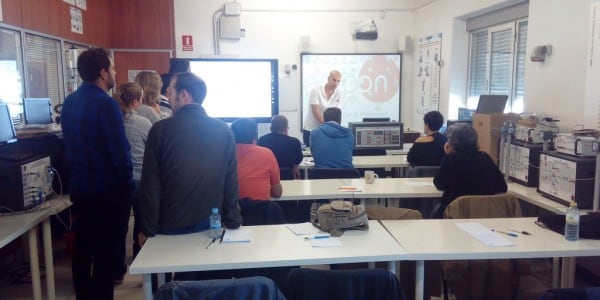
  1. Many students view results simultaneously. To view all results in real time in the classroom by means of a projector or an electronic whiteboard.
  2. Open Control, Multicontrol and Real Time Control. This unit allows intrinsically and/or extrinsically to change the span, gains, proportional, integral, derivative parameters, etc, in real time.
  3. This unit is totally safe as uses mechanical, electrical and electronic, and software safety devices.
  4. This unit can be used for doing applied research.
  5. This unit can be used for giving training courses to Industries even to other Technical Education Institutions.
  6. Control of the RYC unit process through the control interface box without the computer.
  7. Visualization of all the sensors values used in the RYC unit process.
  8. Several other exercises can be done and designed by the user.

質量

售後服務

要求信息