ESHC(2x1m) Computer Controlled Hydrologic Systems, Rain Simulator and Irrigation Systems Unit (2x1 m)

COMPUTER CONTROLLED HYDROLOGIC SYSTEMS, RAIN SIMULATOR AND IRRIGATION SYSTEMS UNIT (2X1 M) - ESHC(2x1m)

Unit: ESHC(2x1m). Computer Controlled Hydrologic Systems, Rain Simulator and Irrigation Systems Unit (2x1 m)

COMPUTER CONTROLLED HYDROLOGIC SYSTEMS, RAIN SIMULATOR AND IRRIGATION SYSTEMS UNIT (2X1 M) - ESHC(2x1m)

Unit details

COMPUTER CONTROLLED HYDROLOGIC SYSTEMS, RAIN SIMULATOR AND IRRIGATION SYSTEMS UNIT (2X1 M) - ESHC(2x1m)

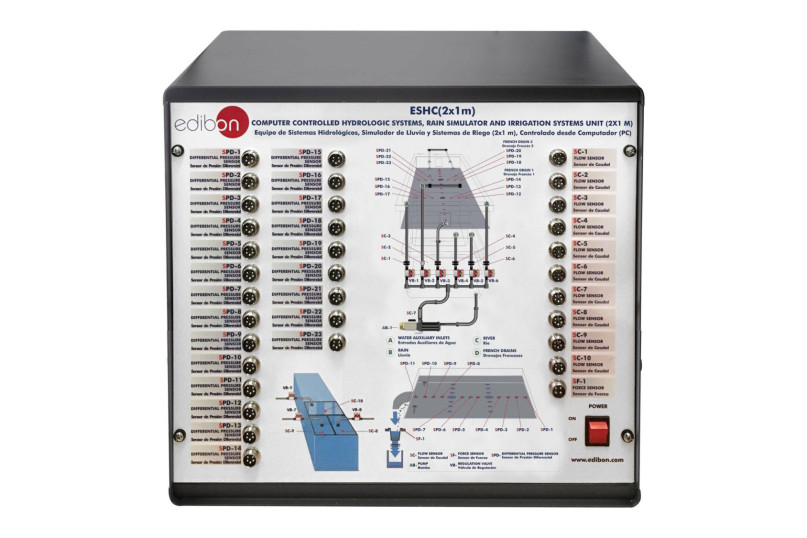
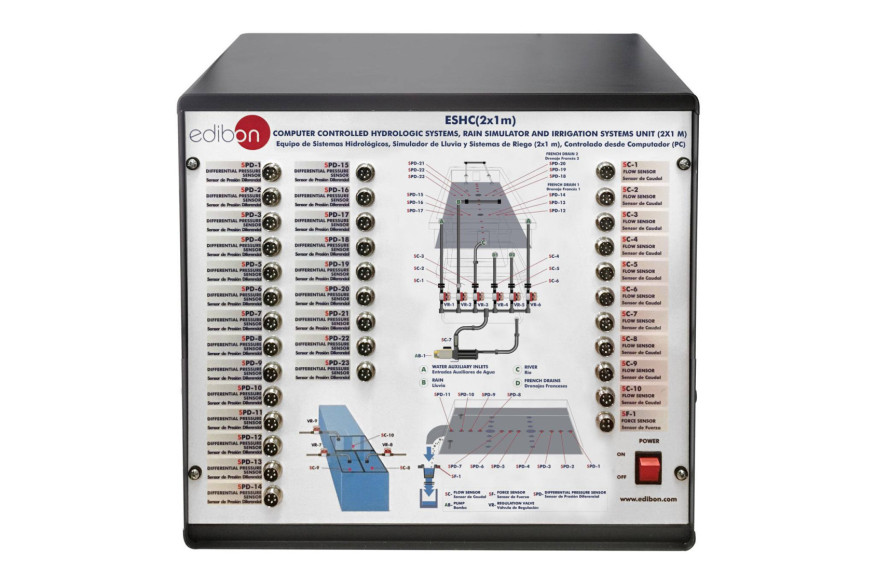
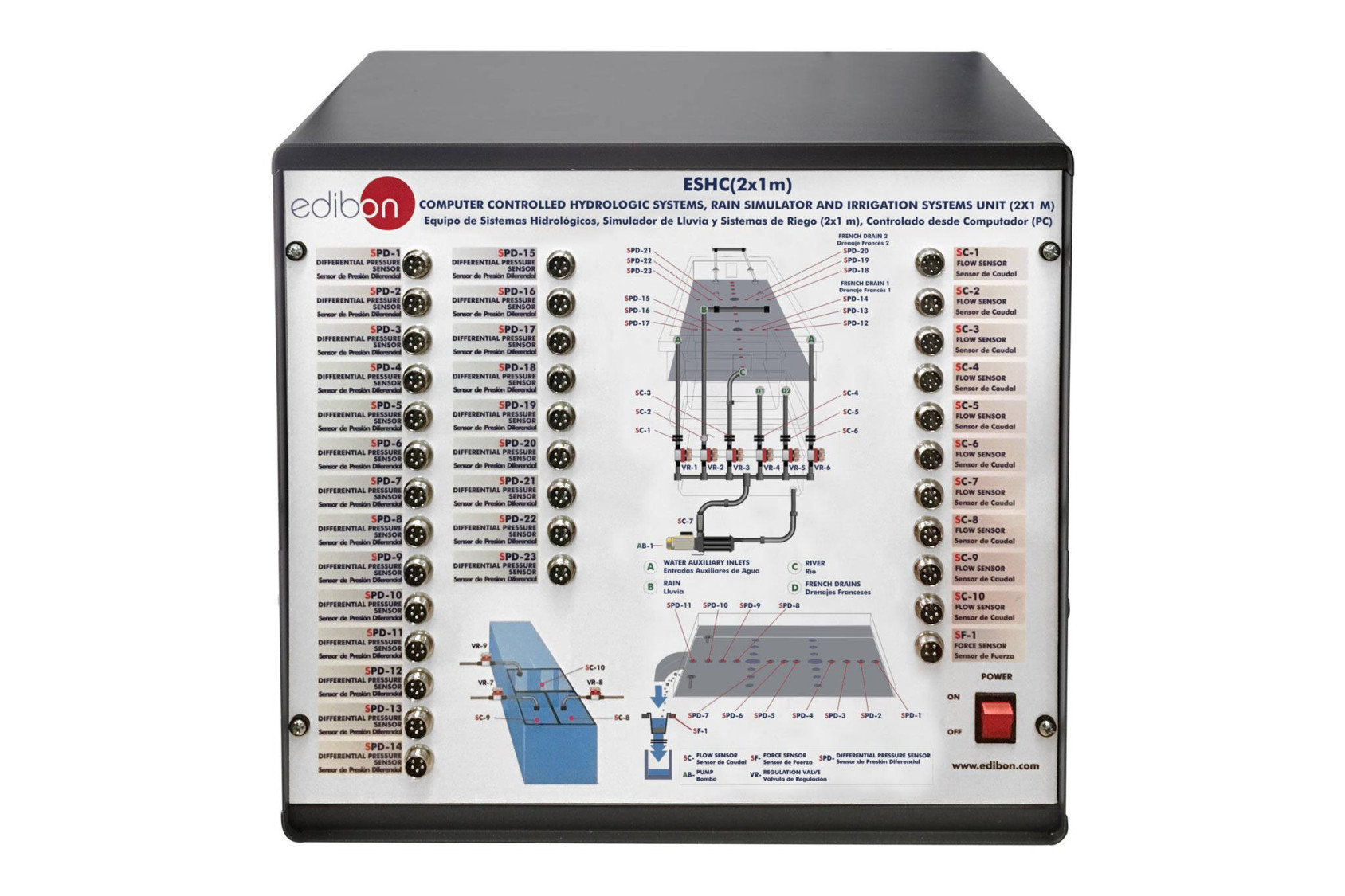
ESHC(2x1m)/CIB. Control Interface Box: The Control Interface Box is part of the SCADA system

COMPUTER CONTROLLED HYDROLOGIC SYSTEMS, RAIN SIMULATOR AND IRRIGATION SYSTEMS UNIT (2X1 M) - ESHC(2x1m)

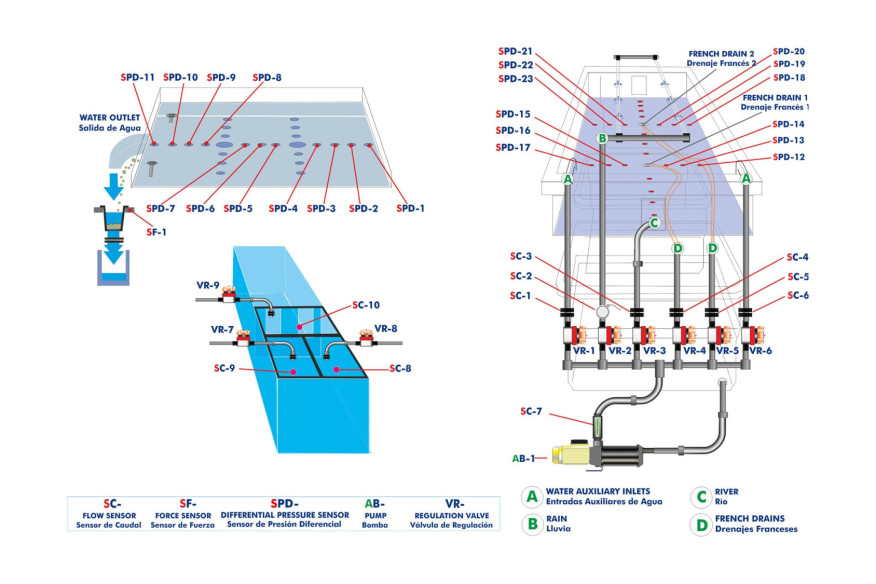
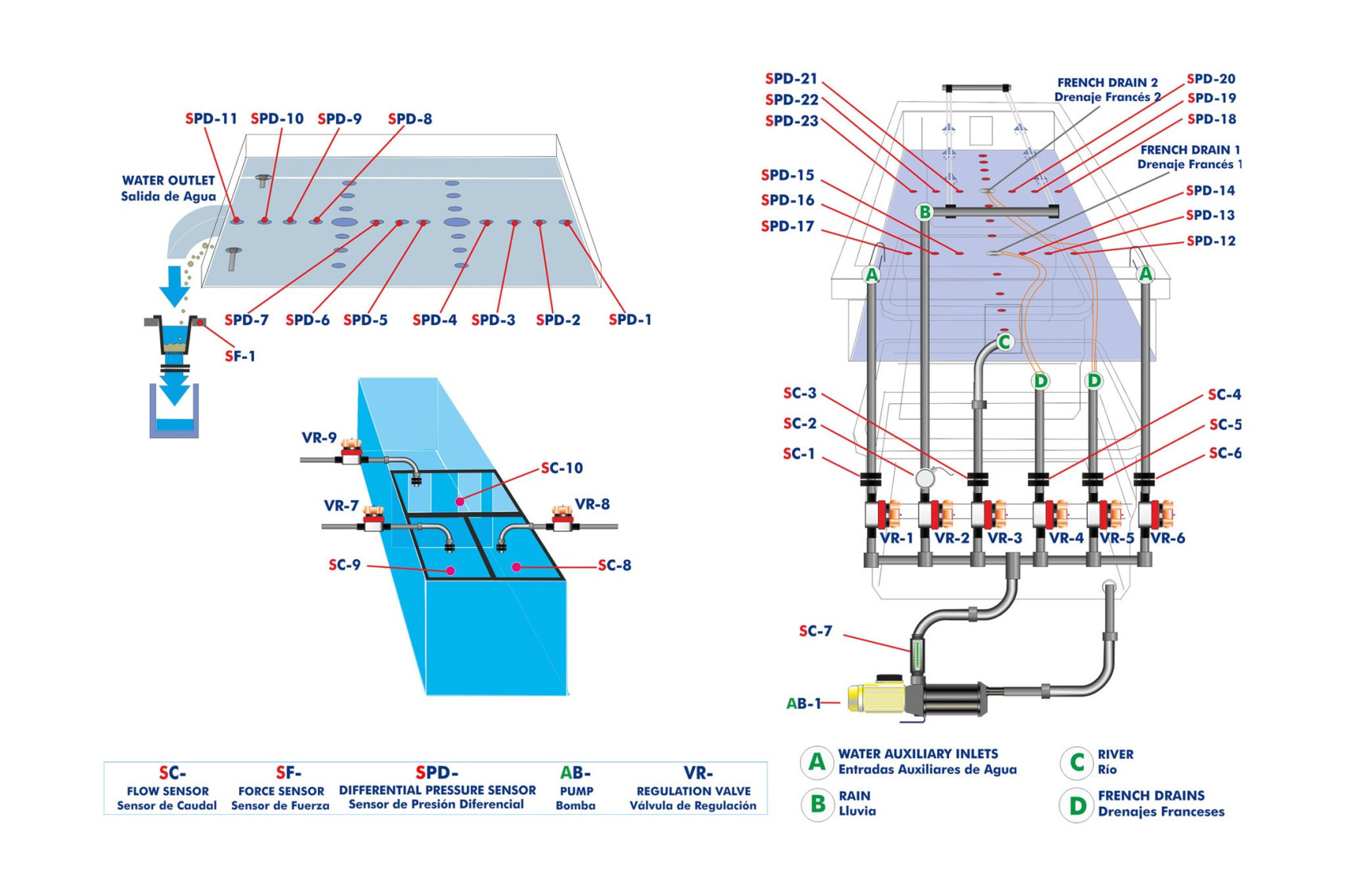
Process diagram and unit elements allocation

COMPUTER CONTROLLED HYDROLOGIC SYSTEMS, RAIN SIMULATOR AND IRRIGATION SYSTEMS UNIT (2X1 M) - ESHC(2x1m)

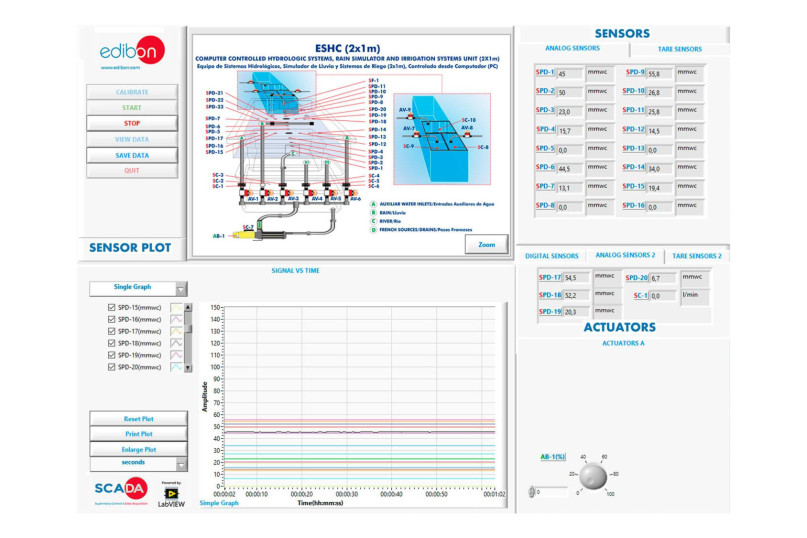
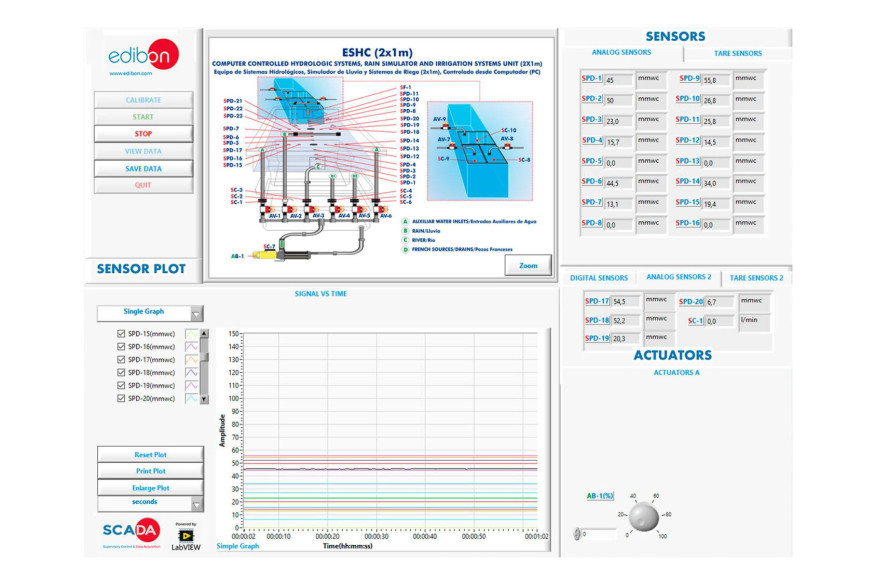
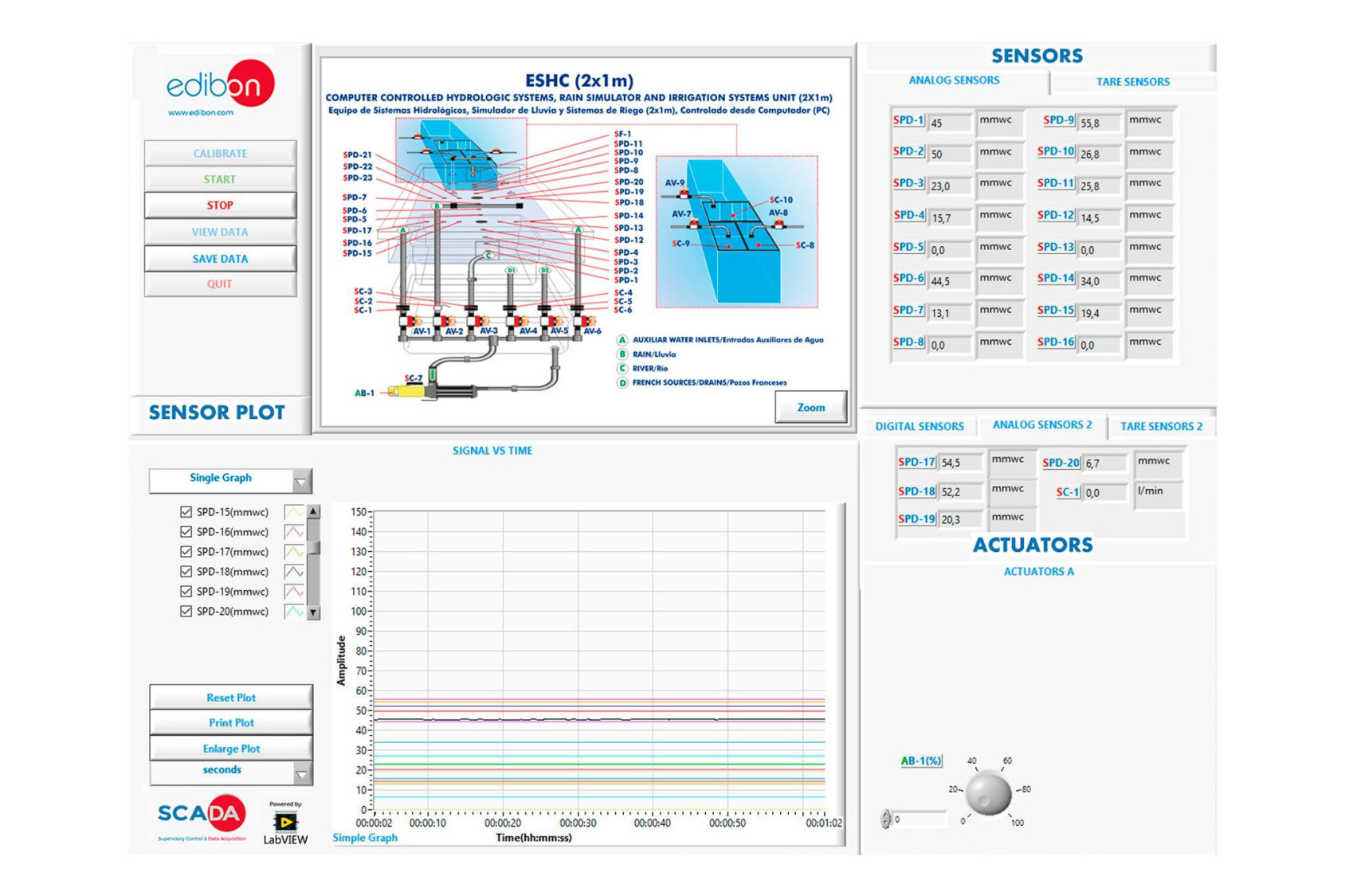
ESHC(2x1m)/SOF. ESHC(2x1m) Software. Main Screen

COMPUTER CONTROLLED HYDROLOGIC SYSTEMS, RAIN SIMULATOR AND IRRIGATION SYSTEMS UNIT (2X1 M) - ESHC(2x1m)

創新系統

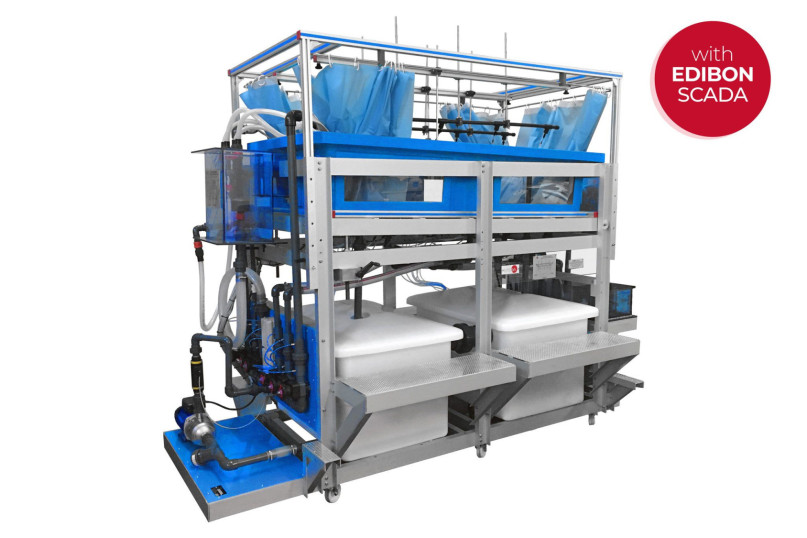
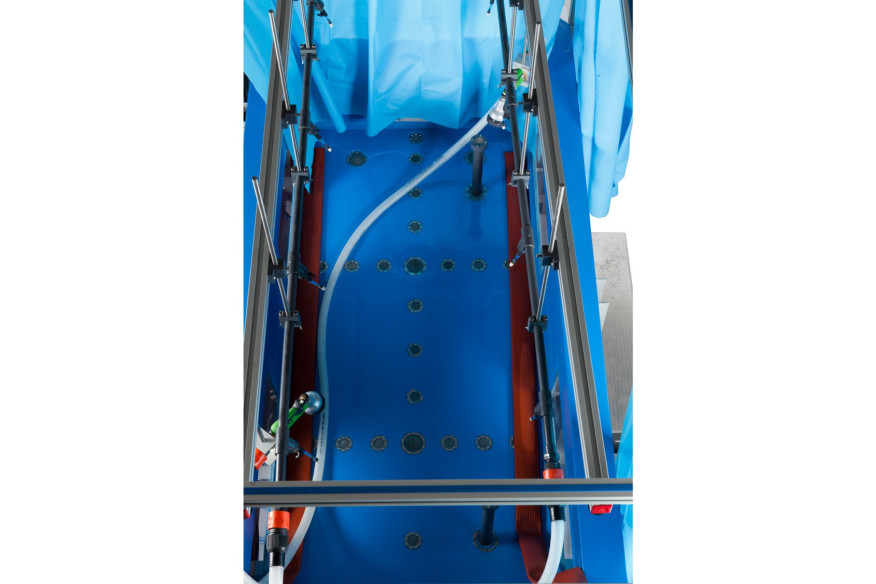
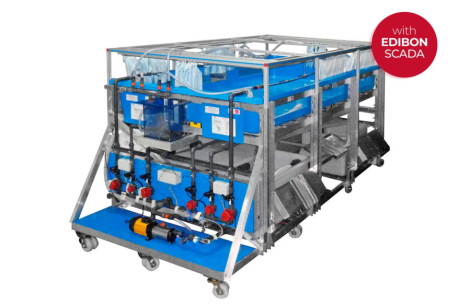
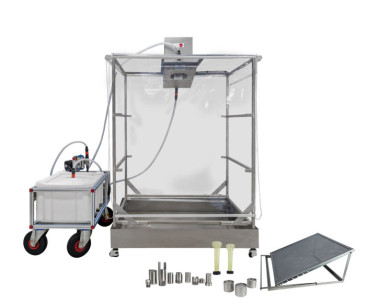
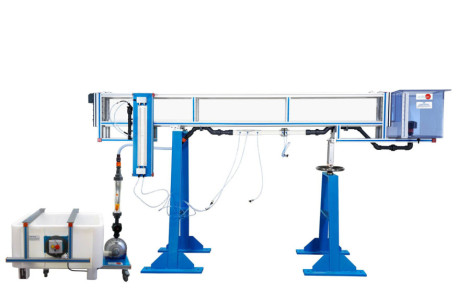
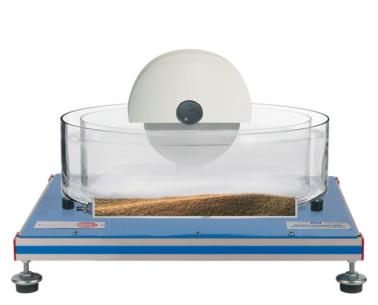
The Computer Controlled Hydrologic Systems, Rain Simulator and Irrigation Systems Unit (2x1 m), "ESHC(2x1m)", has been designed by EDIBON to demonstrate some physical processes found in hydrology and fluvial geomorphology, including: rainfall hydrographs for catchment areas of varying permeability, the formation of rivers and their features and effects of sediment transport, the abstraction of ground water by drains, both with and without surface recharge from rainfall, etc.

查看一般說明

相關新聞

一般說明

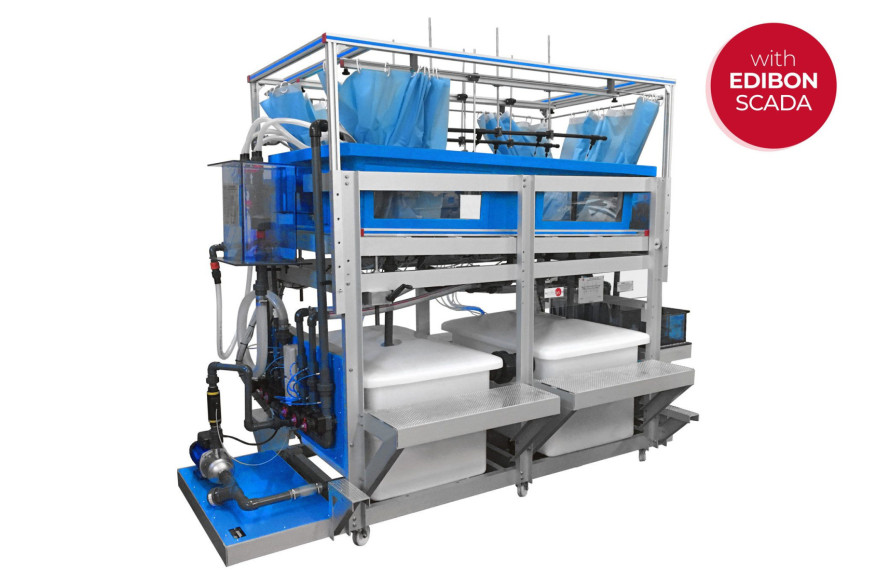
The Computer Controlled Hydrologic Systems, Rain Simulator and Irrigation Systems Unit (2x1 m), "ESHC(2x1m)", has been designed by EDIBON to demonstrate some physical processes found in hydrology and fluvial geomorphology, including: rainfall hydrographs for catchment areas of varying permeability, the formation of rivers and their features and effects of sediment transport, the abstraction of ground water by drains, both with and without surface recharge from rainfall, etc. This unit allows demonstrating, on a small scale, the hydrological principles of ground water flow and the applications of these principles to some engineering constructions. Moreover, it allows to study the use of drains for water abstraction, de-watering and drainage of lakes, and demonstration of flood risks linked to land drainage works.

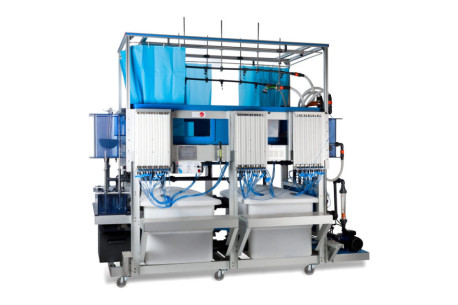
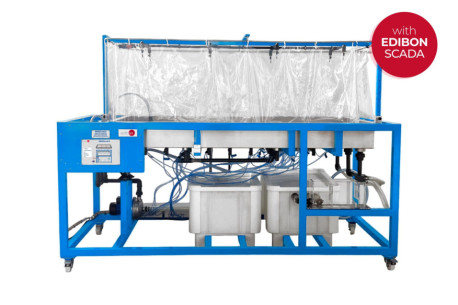
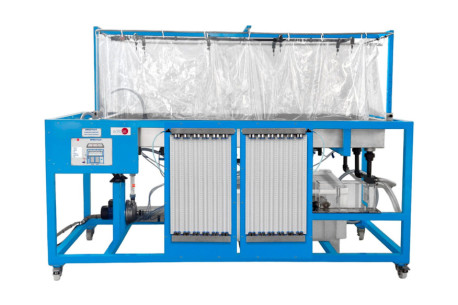
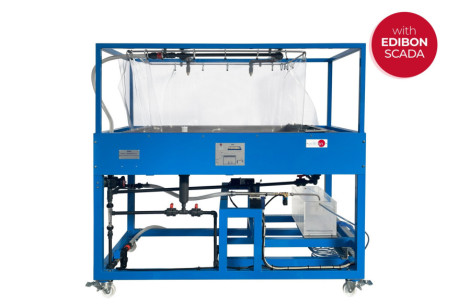
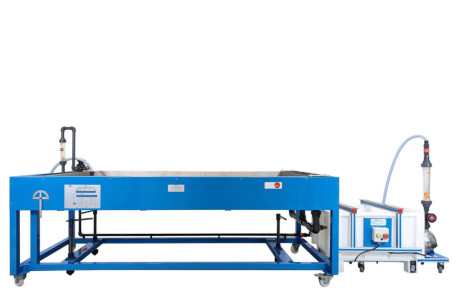
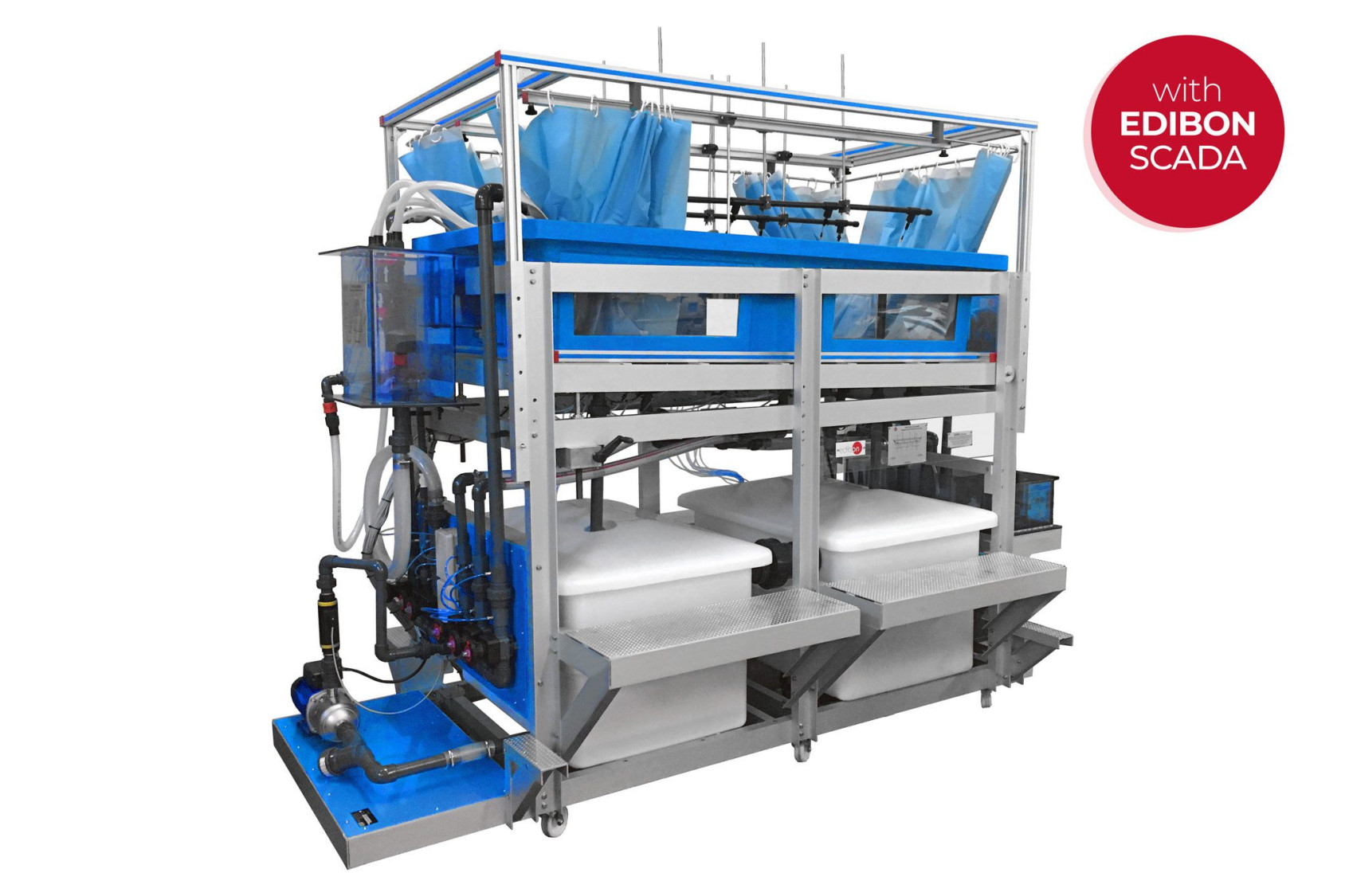
The main element of the unit is a test tank, which can be filled with sand and its tilt regulated by a lifting system. Water is supplied to the test tank through different systems: from two flexible separate hoses (simulating water inlets), from an inlet tank (simulating a river), from spray and showers nozzles located above the tank (simulating rain), or from french drains. Water is output from a river outlet tank, from the drainages located on two test tank corners, from the french drains, which have independent outlets, or from the overflows.

Two large plastic storage tanks are located under the test tank to store water.

A computer controlled pump with speed regulation impels water from the storage tanks to the test tank.

Two flexible separate hoses, placed at the test tank front side, allow adding great inlet flows.

In order to be able to simulate a river, the test tank has a tank attached to the inlet and other tank attached to the outlet. Gravel can be put inside the river inlet tank to deaden the flow and avoid turbulence. The use of a suitable channel section provides appropriate flow conditions in the test tank. The river outlet tank is located at the other end of the test tank and is used for hydrographs, run-off and river formation demonstrations.

The river tanks are communicated with the test tank through a floodgate that has two trap doors, a hermetic one and a meshed one.

Eight spray nozzles are mounted at a double line mobile bridge placed on the test tank and are arranged in a longitudinally equidistant way to provide an even water distribution along the test tank. These nozzles are also adjustable in height and width and can be easily fixed. Each nozzle has an associated ball valve, allowing a wide variety of moving rain precipitation patterns to be simulated.

Two shower nozzles with multiple flows are placed on the test tank and allow storms and local inputs simulation. These nozzles are also adjustable in height and length, and they can be separated from the support to move them manually.

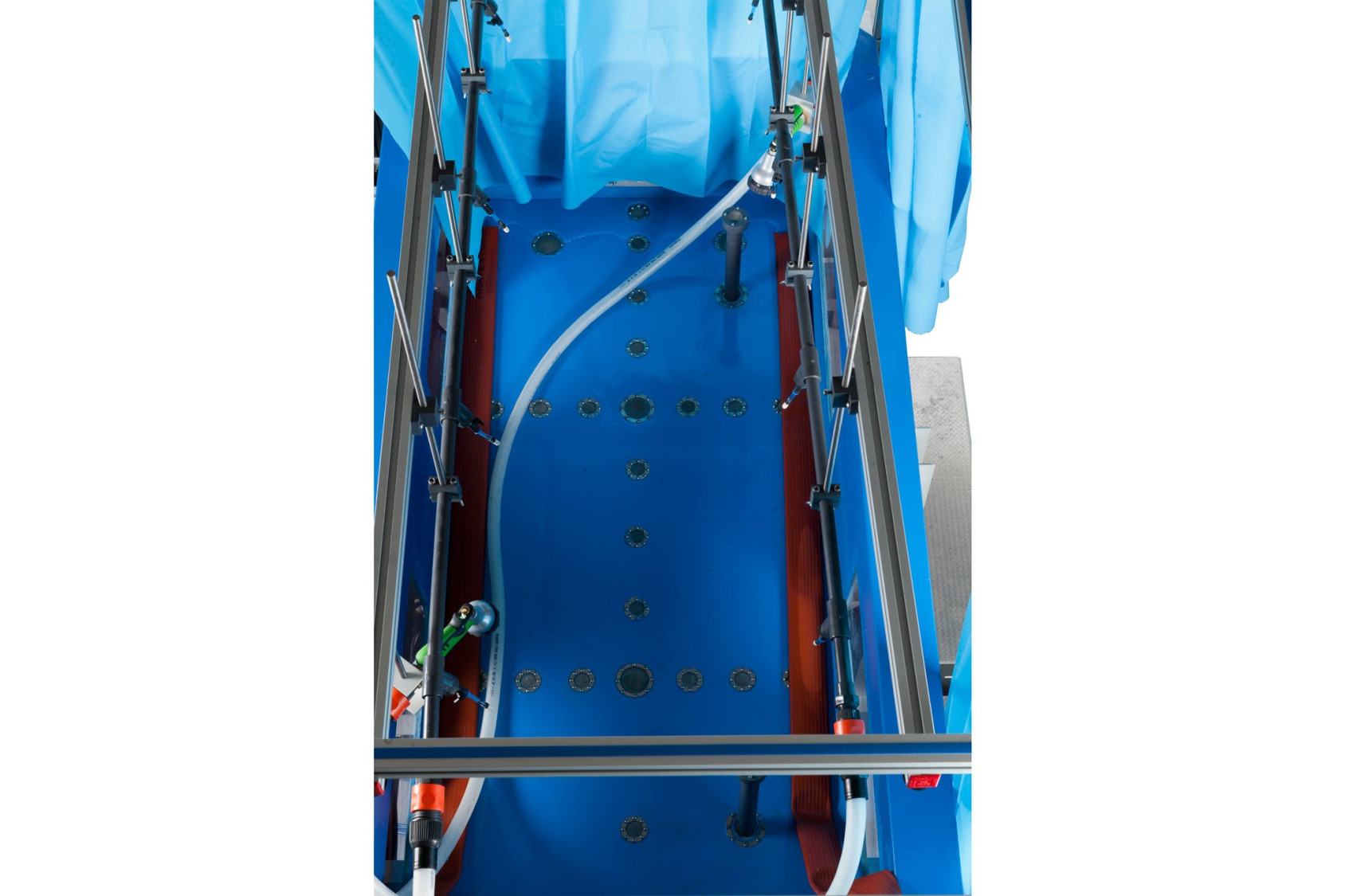
The subsurface flow inputs are via two french drains, located in the middle of the test tank. These french drains extend the full width of the tank. Each french drain can be configured as an inlet or an outlet to permit a wide variety of hydrological demonstrations.

The outlet tank consists of a sediment collection basket.

So, it is possible to measure with a sensor the quantity of collected sediment over a period of time. There are three tanks at the rear part of the unit, each of them connected to one french drain and the other one connected to the drainages. Each one of these tanks has a spillway, which allows to calculate the outlet flow of each tank. The water flow in each tank is measured by a sensor. The outlet system (from french drains or drainages to tanks) includes three diaphragm valves to regulate the flow.

The test tank includes two overflows that are communicated with the storage tanks. The water table can be kept constant by means of these overflows, with adjustable height.

The flow of all the inlet systems can be regulated by a group of diaphragm valves located at the front side of the unit. There are five orifice plates and one flow sensor that allow measuring and control the water flow in each pipe of the inlet system. Other flow sensor is located at the outlet of the pump. Filters are included in the water supply lines, minimizing system disturbances.

The test tank includes 23 tapping points configured in a cruciform pattern. These 23 tapping points have two functions, depending on the position of the valves included. On the one hand, they are used to taking samples to chemically analyze the water at the twenty three points, a feature that allows to broaden the use of the unit to the study of drag and transport of fluvial polluting agents. On the other hand they are used with differential pressure sensors to measure and display the phreatic surface (or ground water table levels).

This Computer Controlled Unit is supplied with the EDIBON Computer Control System (SCADA), and includes: The unit itself + a Control Interface Box + a Data Acquisition Board + Computer Control, Data Acquisition and Data Management Software Packages, for controlling the process and all parameters involved in the process.

練習和指導練習

手册中包含的指导实践练习

  1. Determination of the surface drag.
  2. Determination of a hydrograph with a storm situation.
  3. Calculation of concentration time for a short storm.
  4. Influence of a rainfall water catchment reservoir.
  5. Determination of the compactness index.
  6. Determination of the drainage density.
  7. Reservoir filling and flooding.
  8. Determination of the water obtained thanks to the gravity force and the field capacity.
  9. Study of fluvial-mechanical experiments.
  10. Obstacle in a riverbed.
  11. Study of sediment transport in models of rivers.
  12. Study of a meandering river.
  13. Study of the erosion on river beds and the speed of the flow.
  14. Study of groundwater catchment.
  15. Study of the cone of depression of a well.
  16. Extracting water from an isolated well in a confined aquifer (it requires the additional recommended element ESH-1).
  17. Extracting water from adjoining wells.
  18. Draining an excavation area (it requires the additional recommended element ESH-1).
  19. Draining a polder or lake (it requires the additional recommended element ESH-1).
  20. Well at the center of a round island (it requires the additional recommended element ESH-1).

与该单位进行更多实际操作

  1. Study of the hydrograph of one or several storms.
  2. Obtaining of the pressure profile in a dike.
  3. Formation and development of rivers over time.
  4. Influence of a rainfall water catchment reservoir (it requires the additional recommended element ESH-1).
  5. Extracting water from an isolated well in a confined aquifer (it requires the additional recommended element ESH-1).
  6. Draining an excavation area (it requires the additional recommended element ESH-1).
  7. Study of the storm hydrograph of a previously saturated catchment.
  8. Study of the storm hydrograph of an impermeable catchment.
  9. Study of the effect of a moving storm on a flood hydrograph.
  10. Study of the effect of reservoir storage on a flood hydrograph.
  11. Study of the effect of drain pipes on a flood hydrograph.
  12. Investigation of stream flows modeled in alluvial material.
  13. Study of sediment transport, bedload motion, scour and erosion.
  14. Construction of drawdown curves for one well and two wells systems.

Other possibilities to be done with this unit:

  1. Many students view results simultaneously. To view all results in real time in the classroom by means of a projector or an electronic whiteboard.
  2. Open Control, Multicontrol and Real Time Control. This unit allows intrinsically and/or extrinsically to change the span, gains, proportional, integral, derivative parameters, etc, in real time.
  3. The Computer Control System with SCADA allows a real industrial simulation.
  4. This unit is totally safe as uses mechanical, electrical and electronic, and software safety devices.
  5. This unit can be used for doing applied research.
  6. This unit can be used for giving training courses to Industries even to other Technical Education Institutions.
  7. Control of the ESHC(2x1m) unit process through the control interface box without the computer.
  8. Visualization of all the sensors values used in the ESHC(2x1m) unit process.
  9. By using PLC-PI additional 19 more exercises can be done.
  10. Several other exercises can be done and designed by the user.

可用的类似设备

質量

售後服務

要求信息