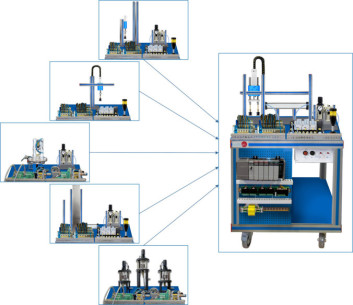
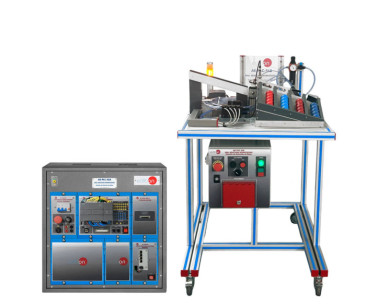
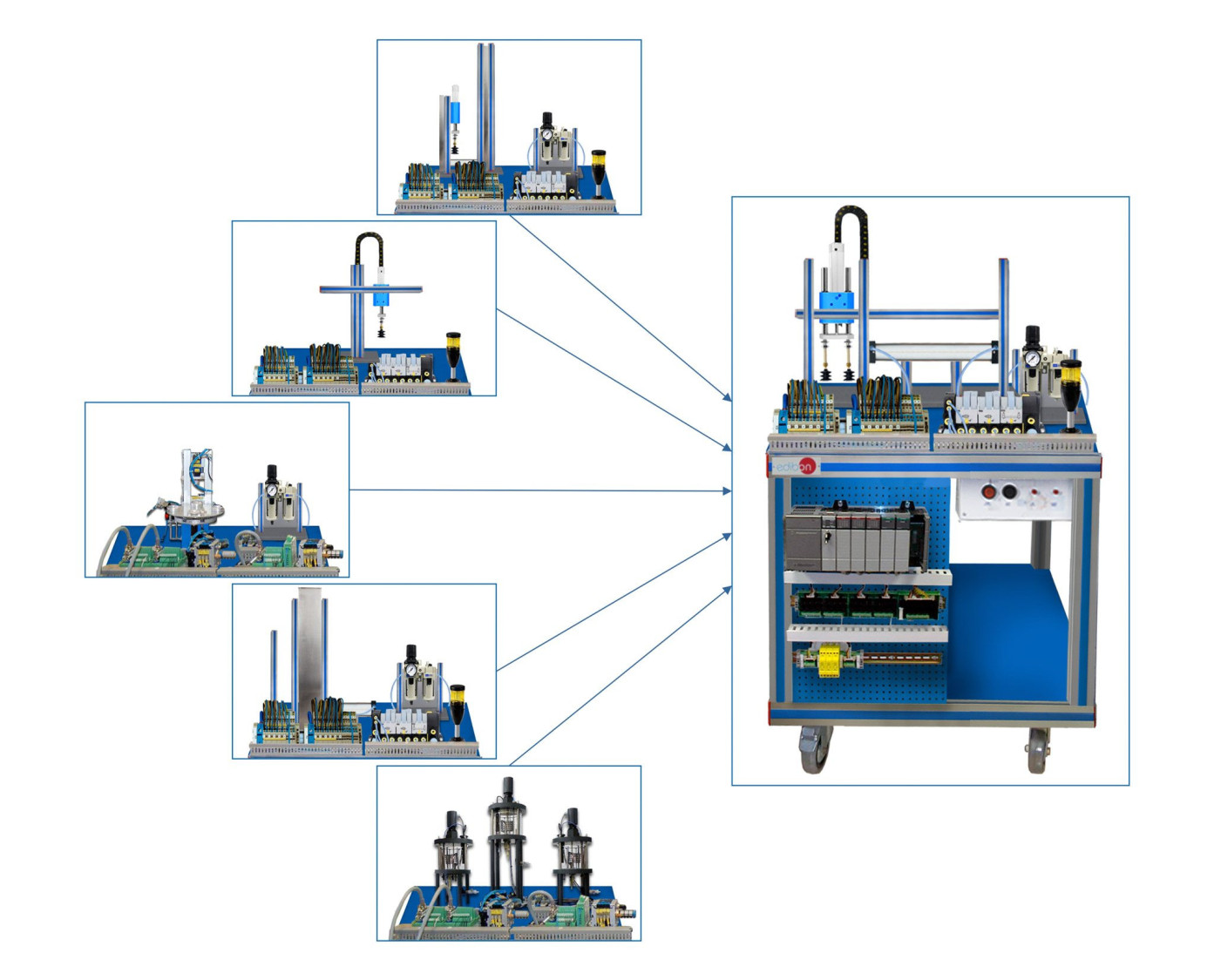
The RFID Identification Workstation, "AE-PLC-RFID", designed by EDIBON, is a workstation that can write, read, and rewrite information in the pieces using the RFID technology. The "AE-PLC-RFID" includes a conveyor system to transport the incoming piece to the RFID identification area.
The "AE-PLC-RFID" workstation is designed to work with a programmable logic controller, PLC. The PLC receives the signals of the RFID header to read and write the work pieces with the RFID tag attached.
The "AE-PLC-RFID" workstation is designed as a modular system to facilitate the understanding of the unit.
The main components are:
- The PLC: is composed by the CPU PLC unit and all the extra modules needed to perform a correct working of the workstation.
- The Control Panel: with start/stop button, emergency pushbutton, reset button, light indicators to show current state of the process, etc.
- The Pneumatic Circuit: contains the required solenoid valves, the vacuum components, the filters and regulators to assure the appropriate working of the workstation.
- The Workstation: is composed by real industrial vertical storage systems such as electric linear actuators, presence sensors, pneumatic gripper, etc.
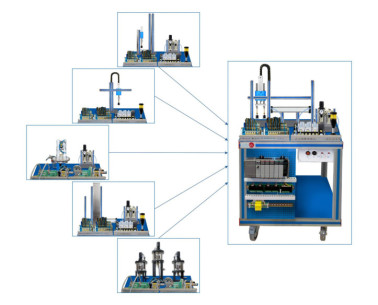
The "AE-PLC-RFID" is an independent workstation that can work alone and/or in conjunction with other workstation to make up a complete Flexible Manufacturing System (*).
*The Flexible manufacturing systems product list is available at the "6.- MECHATRONICS and AUTOMATION" area.
 Preferências de cookies

 Catálogo
 Especificações de Concurso