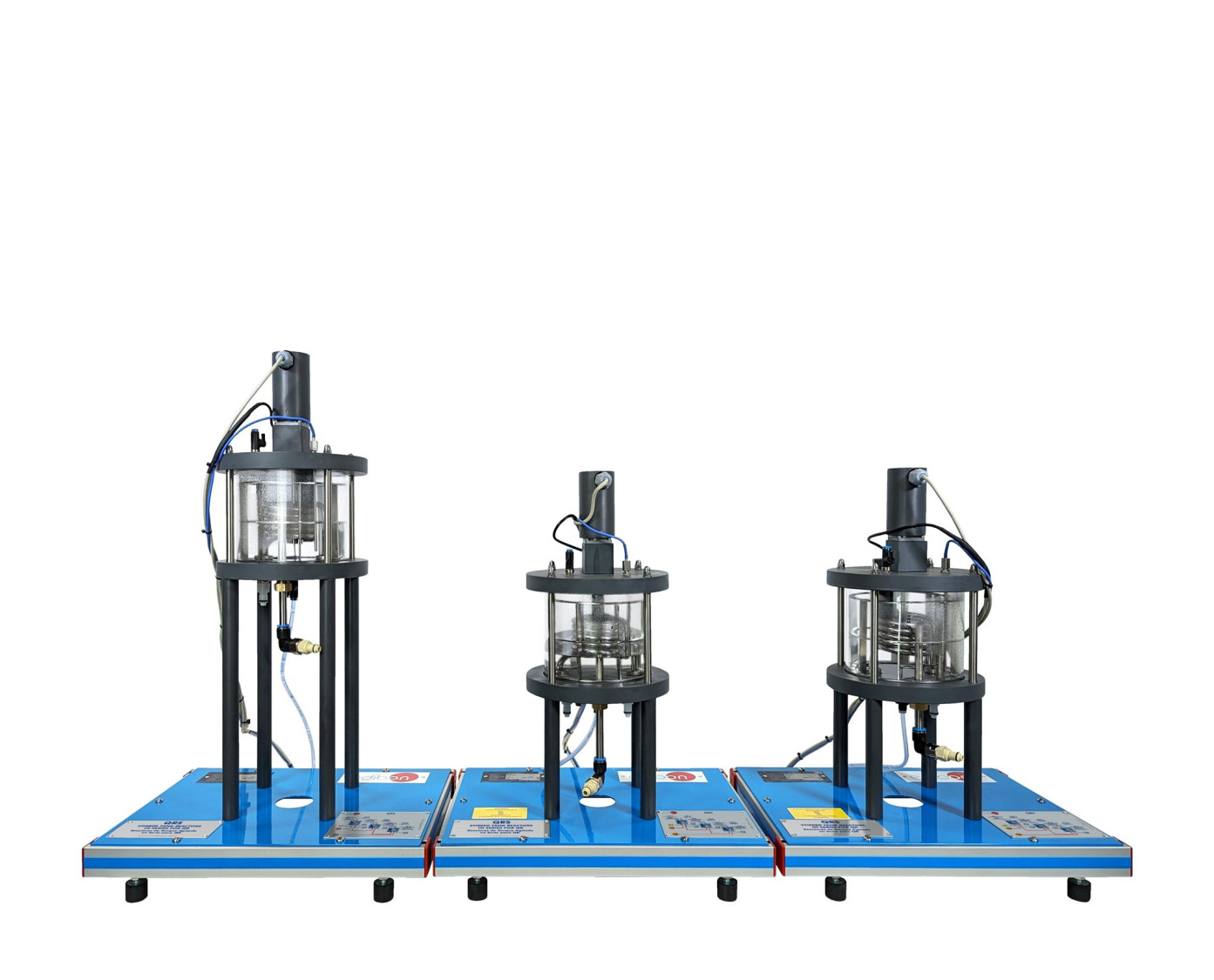
QRS Reaktor Tangki Pengaduk Seri untuk QR

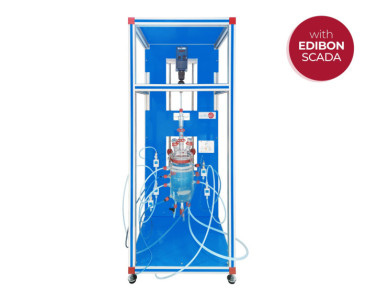
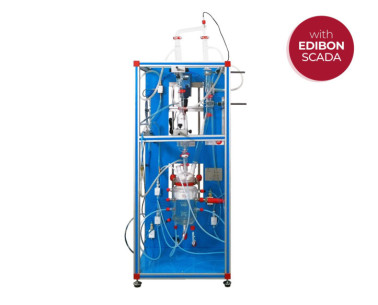
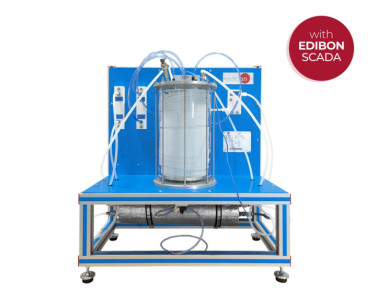
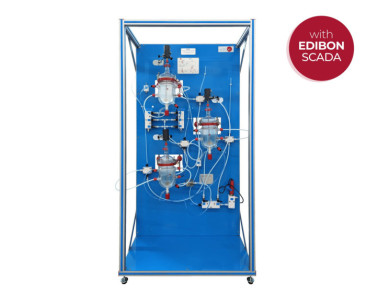
STIRRED TANK REACTORS IN SERIES FOR QR - QRS

SISTEM INOVATIF

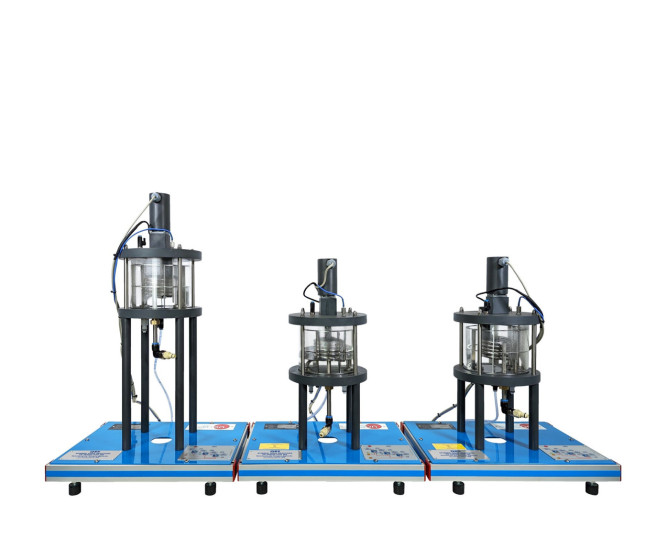
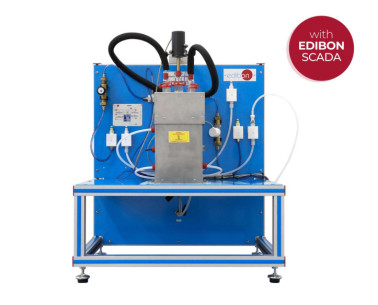
The Stirred Tank Reactors in Series for QR, "QRS", designed by EDIBON, are versatile units for the kinetic study of liquid-liquid homogeneous reactions. This type of reactor allows the outlet flow from one reactor to become the inlet flow for another, optimizing processes and enabling flexible experimentation with one, two, or three reactors, facilitating a comprehensive understanding of the process.

Lihat uraian umum

BERITA TERKAIT

GAMBARAN UMUM

The Stirred Tank Reactors in Series for QR, "QRS", designed by EDIBON, are versatile units for the kinetic study of liquid-liquid homogeneous reactions. This type of reactor allows the outlet flow from one reactor to become the inlet flow for another, optimizing processes and enabling flexible experimentation with one, two, or three reactors, facilitating a comprehensive understanding of the process.

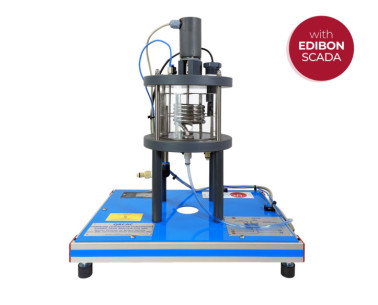
These reactors enable a wide variety of practices, such as temperature sensor calibration, determination of ionic conductivities, and simulation of different reactor configurations.

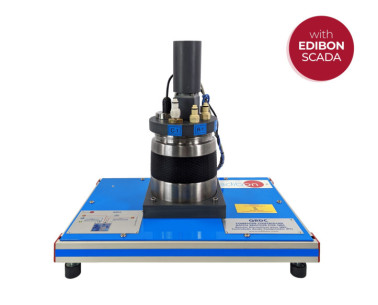
With the ability to operate with one or up to three reactors in series, in continuous mode and with mixing effects, the "QRS" facilitates detailed analysis of the effects of reaction parameters on chemical kinetics, thus contributing to the advancement of knowledge in this field.

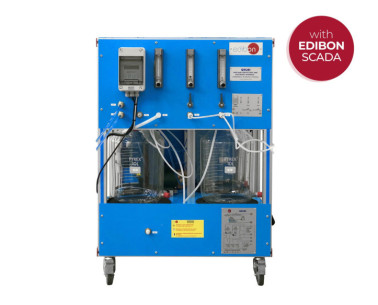
To work with this reactor, the Base and Service Unit, "QUS", is required, which supplies the necessary reagents and thermostatic water for proper operation.

LATIHAN DAN PRAKTEK PEDOMAN

LATIHAN PRAKTIS YANG DIANDAL TERMASUK DALAM PANDUAN

  1. Calibration of the peristaltic pumps of the reagents to obtain the reagents flow measurements.
  2. Determination of the ionic conductivities.
  3. Discontinuous operation. Obtention of the reaction order with respect to ethyl acetate. Initial velocity method.
  4. Discontinuous operation. Obtention of the reaction order with respect to sodium hydroxide. Initial velocity method.
  5. Batch operation. Velocity constant calculation. Constant sodium hydroxide initial concentration.
  6. Batch Operation. Velocity constant calculation. Constant ethylacetate initial concentration.
  7. Velocity equation formulation.
  8. Batch operation. Variation of the kinetic constant with temperature. Arrhenius equation.
  9. Batch operation. Comparison between theoretical and experimental conversion. Deviation from ideality.
  10. DemonstratIon the influence of stirring on the experimental conversion in the ethyl acetate hydrolysis reaction.
  11. Study the difference between batch and continuos operation modes.
  12. Study of basic hydrolysis of the ethyl acetate with the three reactors in a continuous operation configuration.

LEBIH BANYAK LATIHAN PRAKTIS YANG AKAN DILAKUKAN DENGAN UNIT

  1. Investigation of dynamic behaviour of stirred tank reactors in series.
  2. Determination of the ionic conductivities.
  3. Influence of flow rate.
  4. Work with just one reactor in continuous.
  5. Work with just one reactor in continuous with mixture effects.
  6. Work with three reactors in continuous.
  7. Effect of step input change.
  8. Response to an impulse change.
  9. Investigation of time constant using dead time coil.

BARANG YANG DIBUTUHKAN

KUALITAS

LAYANAN PURNA JUAL

Meminta informasi