CPIC Pabrik Kontrol Proses Industri, Dikendalikan dari Komputer (PC)
SISTEM INOVATIF
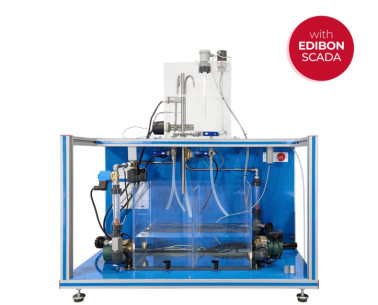
The The Computer Controlled Industrial Process Control Plant, "CPIC", designed by EDIBON, allows users to understand the complexity of industrial automation, observe the interaction between different variables, and analyze how changing a setpoint affects process stability, bringing them closer to the reality of industrial plants.
Ekspansi
Laboratorium
BERITA TERKAIT
GAMBARAN UMUM
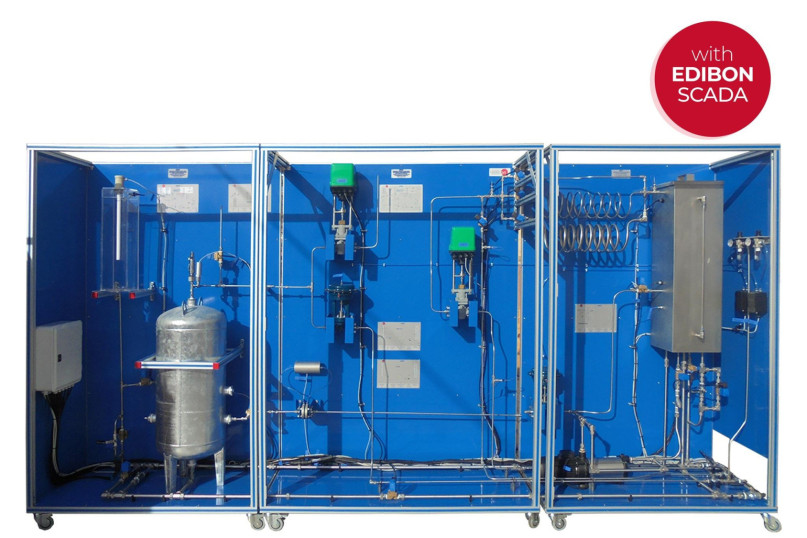
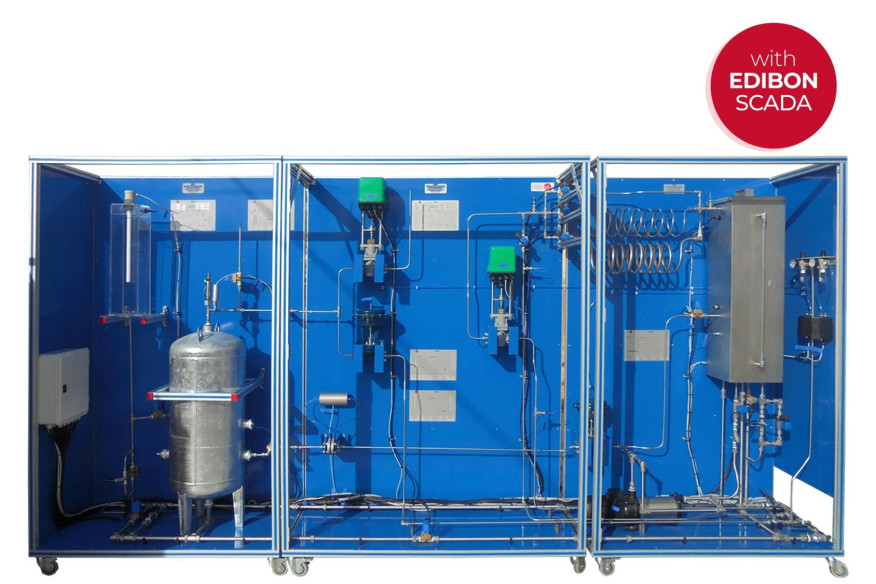
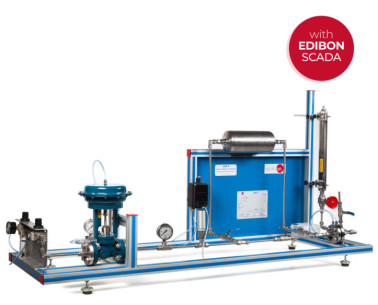
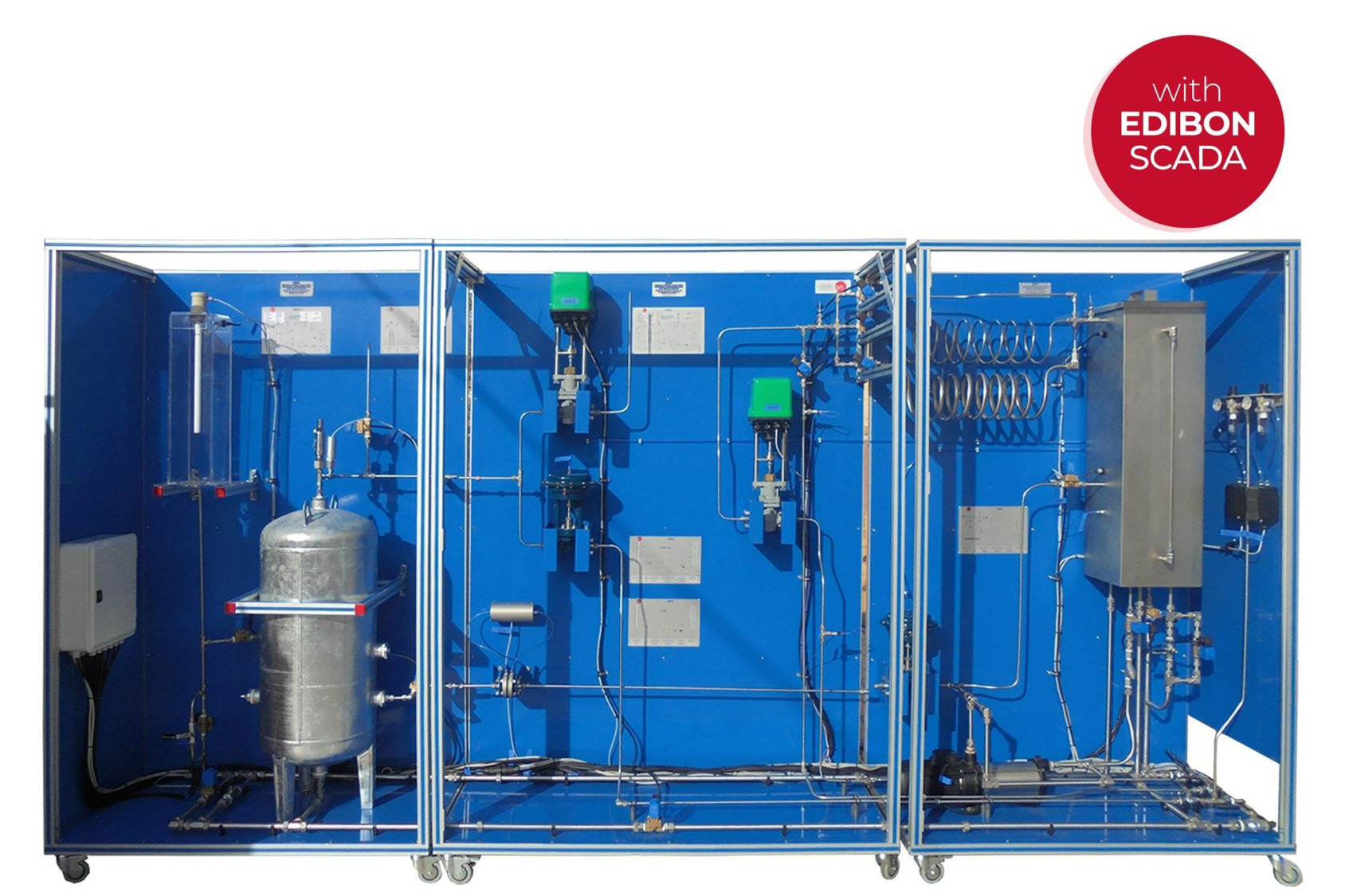
The Computer Controlled Industrial Process Control Plant, "CPIC", has been designed by EDIBON for the study of industrial process control through experimentation with variables such as flow, level, pressure, and temperature.
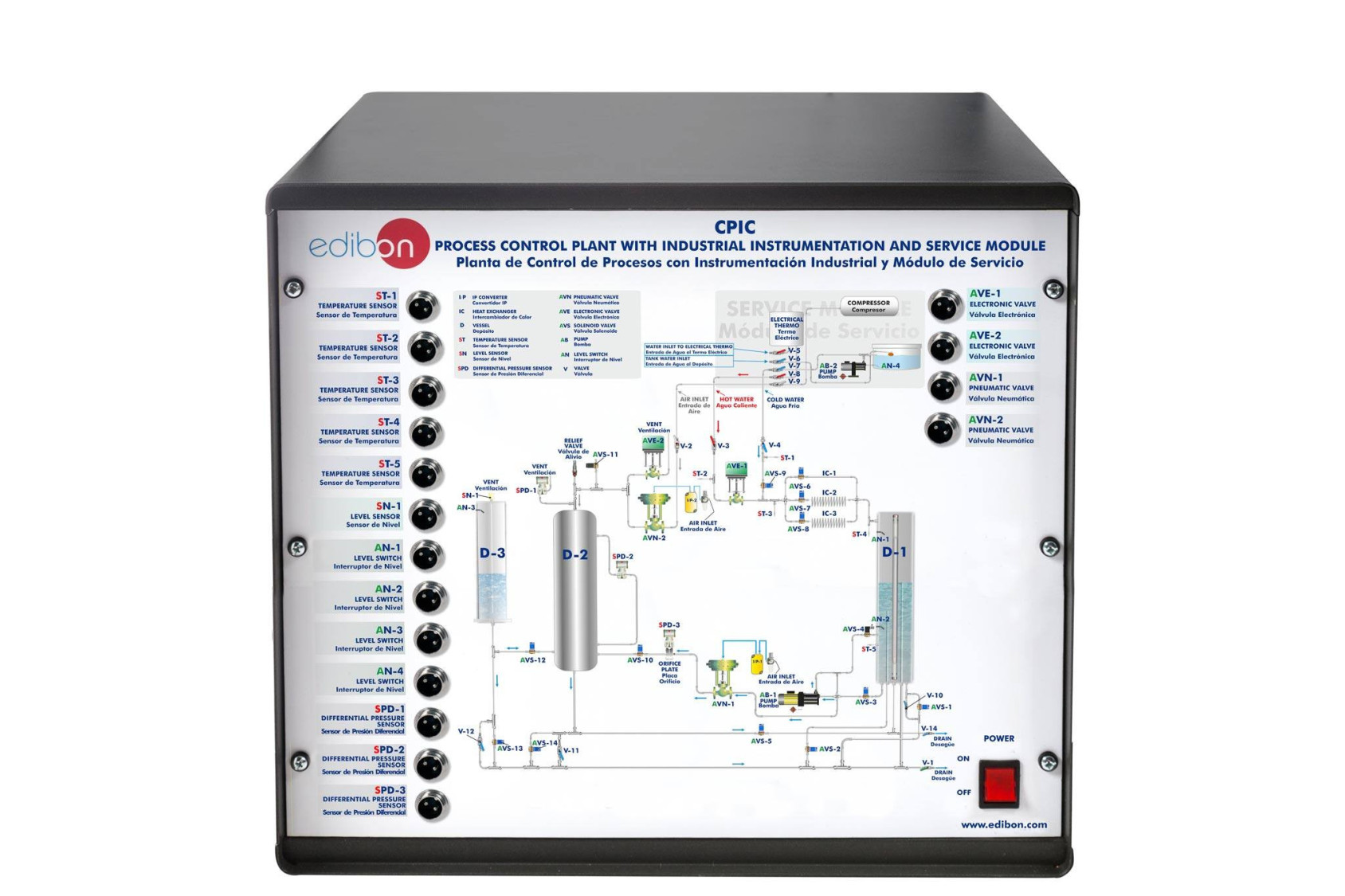
This unit allows the practical analysis of process dynamics, interaction between variables, and control loop behavior, facilitating the understanding of regulation strategies, stability, and response to disturbances, both in training and research. Its design reproduces real operating conditions, integrating service, measurement, and control elements.
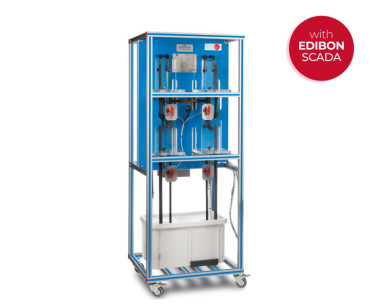
The unit consists of a service module and a main unit:
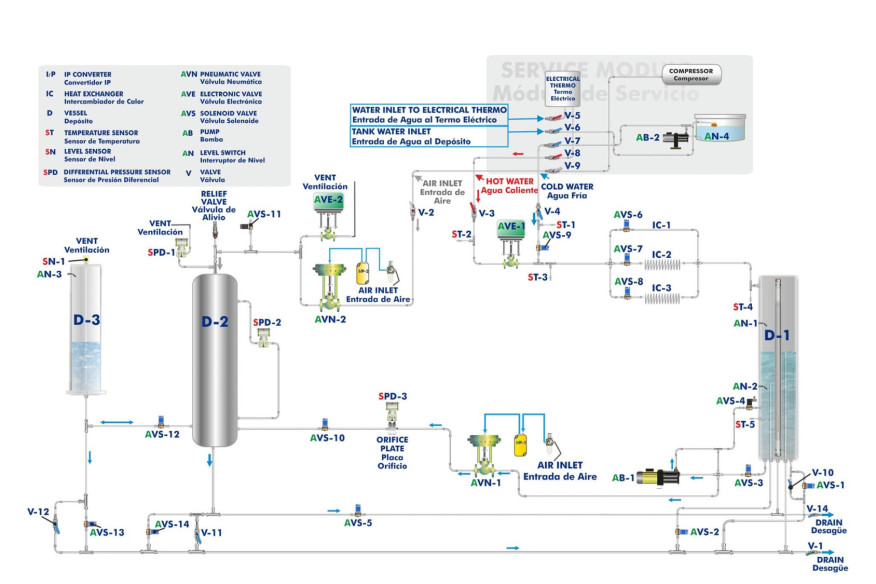
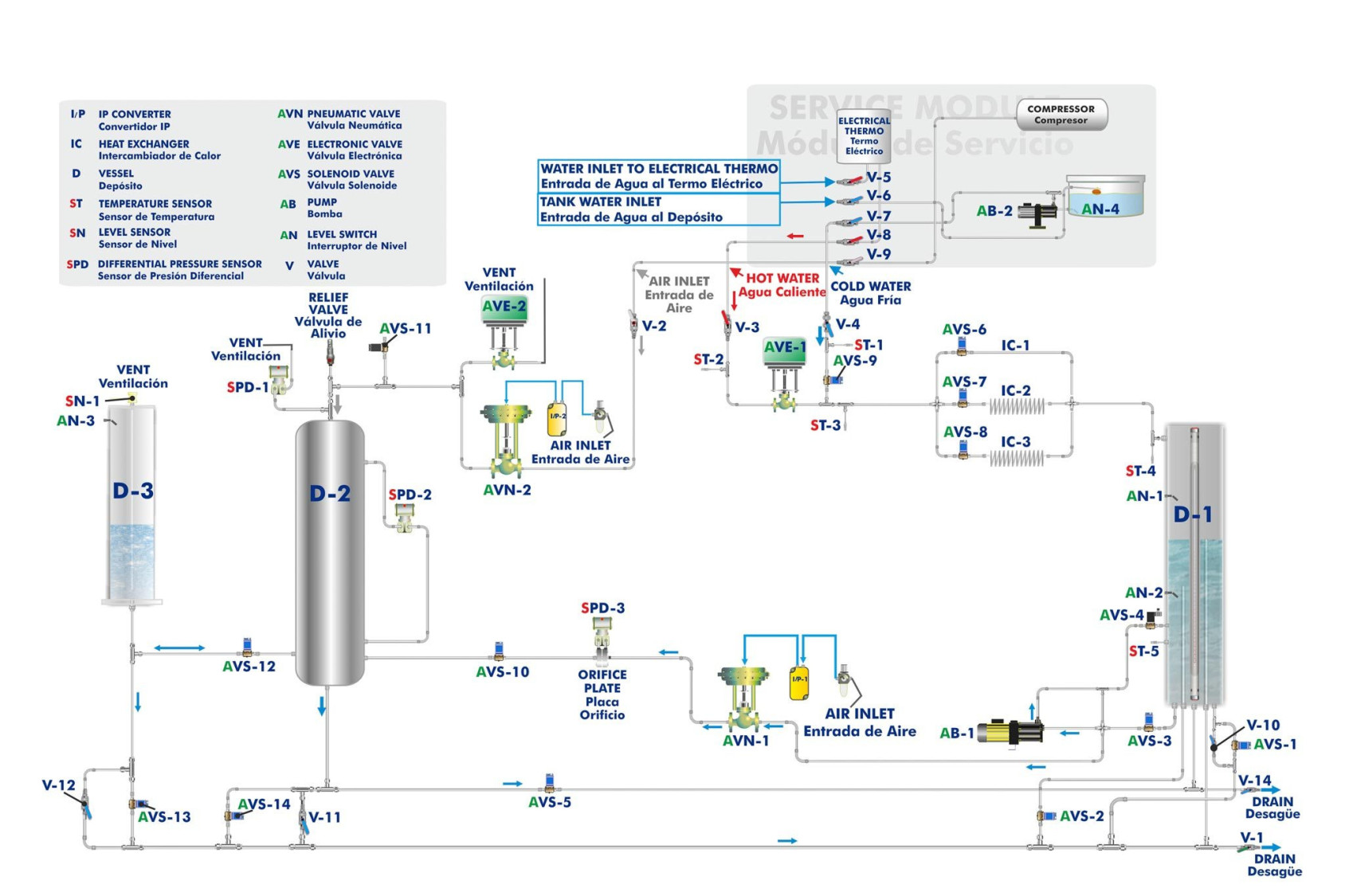
- Service module: Provides the necessary resources for operation, including cold water, hot water, and compressed air. It incorporates a compressor for air pressure regulation, a cold water tank with level control, a pump, and a tank with a heating element for hot water generation.
- Main unit: It includes three tanks with different characteristics for the study of control loops:
- An atmospheric tank for temperature control.
- A pressurizable tank (up to 4 bar) for flow, pressure, and level control.
- A transparent atmospheric tank for level control.
The unit includes electronic control valves associated with PID controllers and fast-acting pneumatic valves. It is also equipped with temperature, flow, pressure, and level sensors providing real-time data.
The configurable design allows working with different control loops, including temperature, flow, pressure, and level, providing a versatile unit for process study from a practical and applied approach.
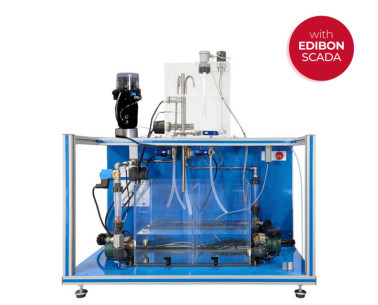
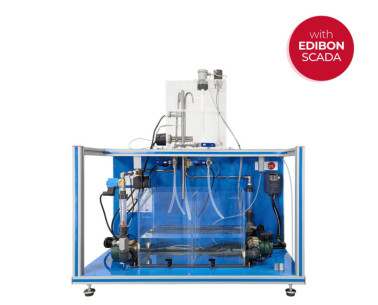
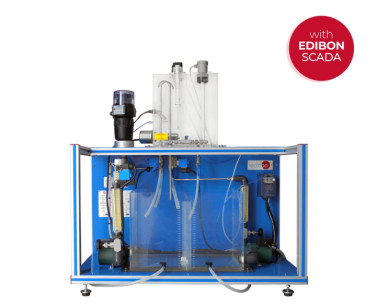
The Computer Controlled Industrial Process Control Plant, "CPIC", can also be supplied in specific configurations focused on the study of a single variable:
- CPIC-C: Computer Controlled Industrial Process Control Plant (only Flow). Allows the specific study of flow regulation, head loss analysis, and flow dynamic behavior.
- CPIC-N: Computer Controlled Industrial Process Control Plant (only Level). Focused on the analysis of level control, process stability, and response to disturbances in tanks.
- CPIC-P: Computer Controlled Industrial Process Control Plant (only Pressure). Allows the study of pressure regulation, behavior of compressible fluids, and pressurized systems.
- CPIC-T: Computer Controlled Industrial Process Control Plant (only Temperature). Designed for the analysis of heat transfer, thermal control, and thermal system dynamics.
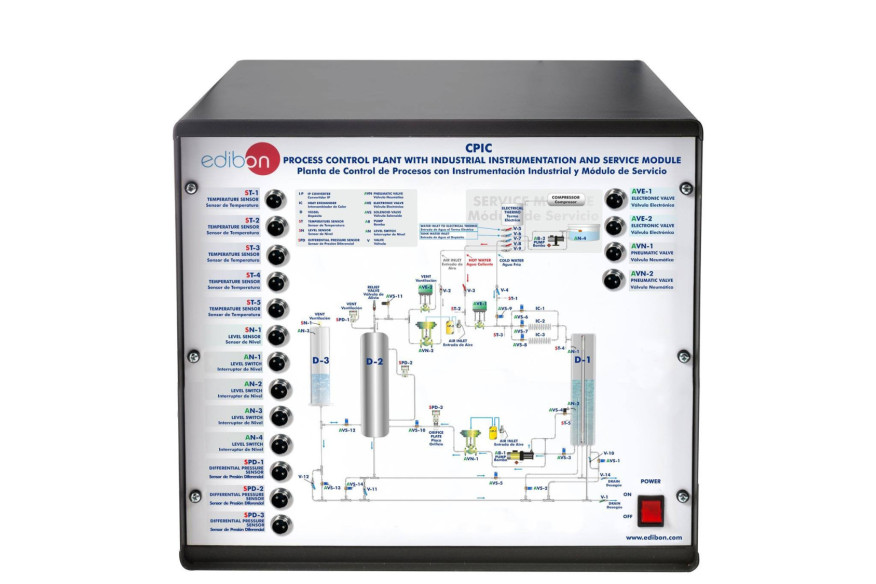
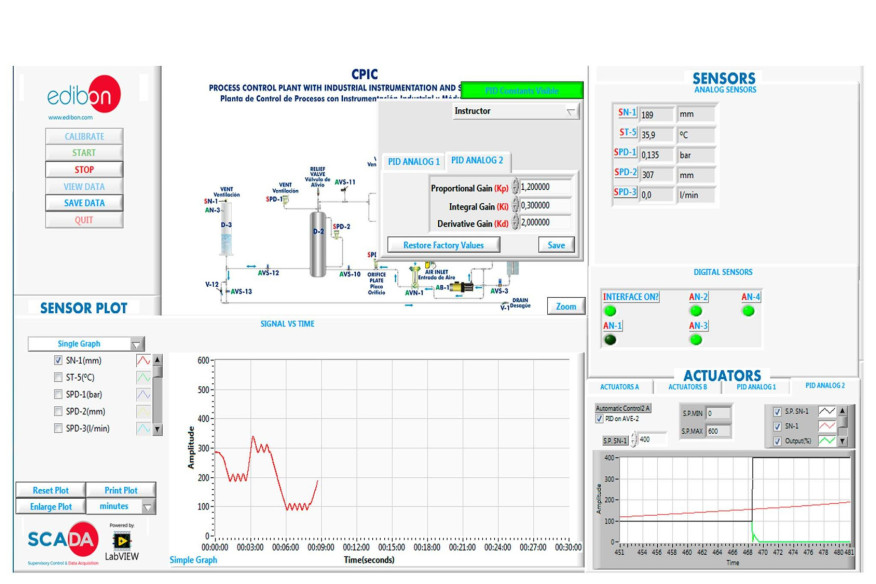
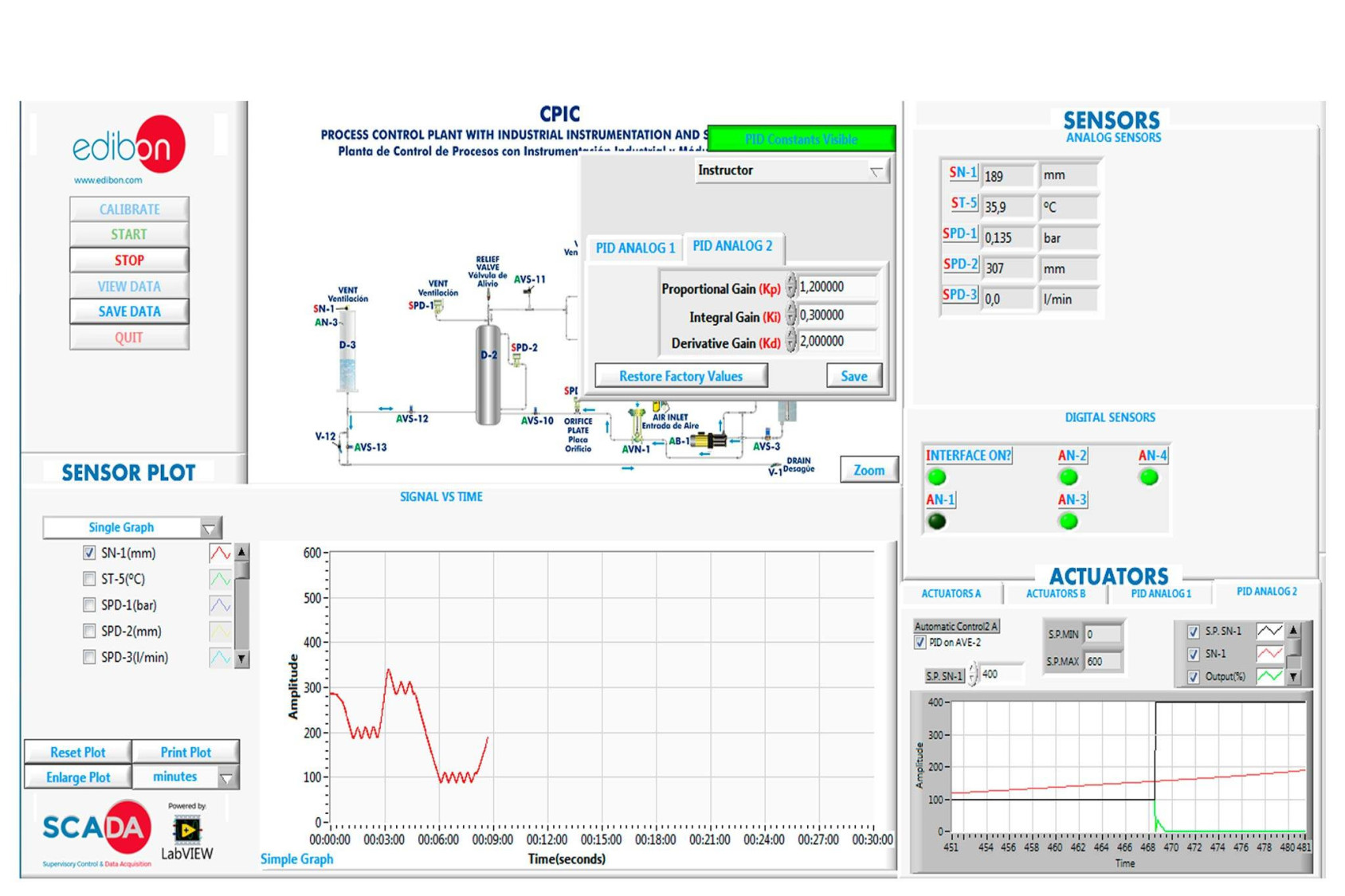
This Computer Controlled Unit is supplied with the EDIBON Computer Control System (SCADA), and includes: The unit itself + a Control Interface Box + a Data Acquisition Board + Computer Control, Data Acquisition and Data Management Software Packages, for controlling the process and all parameters involved in the process.
LATIHAN DAN PRAKTEK PEDOMAN
LATIHAN PRAKTIS YANG DIANDAL TERMASUK DALAM PANDUAN
- Familiarization with the different components of the system and their symbolic representation. Identification of components and description of their functions.
- The auxiliary systems: air and hot water supply.
- Flow sensors calibration.
- Temperature sensors calibration.
- Level sensor calibration.
- I/P converter calibration.
- Flow control loop (on/off).
- Flow control loop (proportional).
- Flow control loop (P+I).
- Flow control loop (P+D).
- Flow control loop (P+I+D).
- Adjust of the flow controller constants (Ziegler-Nichols).
- Adjust of the flow controller constants (reaction curves).
- Search of simple shortcomings in the loop of flow control.
- Temperature control loop (on/off).
- Temperature control loop (proportional).
- Temperature control loop (P+I).
- Temperature control loop (P+D).
- Temperature control loop (P+I+D).
- Adjust of the temperature controller constants (minimum area or reduction rate).
- Adjust of the temperature controller constants (minimum disturbance criterion).
- Adjust of the temperature controller constants (minimum width criterion).
- Study of the retards for speed/distance, exemplified through the temperature control loop.
- Study of the energy lost in the temperature control loop.
- Search of simple shortcomings in temperature control loop.
- Level control loop (on/off).
- Level control loop (proportional).
- Level control loop (P+I).
- Level control loop (P+D).
- Level control loop (P+I+D).
- Adjust of the level controller constants (minimum area or reduction rate).
- Adjust of the level controller constants (minimum disturbance criterion).
- Adjust of the level controller constants (minimum width criterion).
- Search of simple shortcomings in level control loop.
- Pressure control loop (on/off).
- Pressure control loop (proportional).
- Pressure control loop (P+I).
- Pressure control loop (P+D).
- Pressure control loop (P+I+D).
- Adjust of the pressure controller constants (minimum area or reduction rate).
- Adjust of the pressure controller constants (minimum disturbancecriterion).
- Adjust of the pressure controller constants (minimum width criterion).
- Search of simple shortcomings in the pressure control loop.
- The use of the controllers in cascade, exemplified with the level/flow control loop.
- Adjust of cascade control constants (minimum area or reduction rate).
- Adjust of cascade control constants (minimum disturbance criterion).
- Adjust of cascade control constants (minimum width criterion).
- Search of simple shortcomings in cascade control loop.
- Practical operation of the control plant to some wanted specific values: transfers without interferences.
- Calculation of the fluid flow in function of the differential pressure sensor.
LEBIH BANYAK LATIHAN PRAKTIS YANG AKAN DILAKUKAN DENGAN UNIT
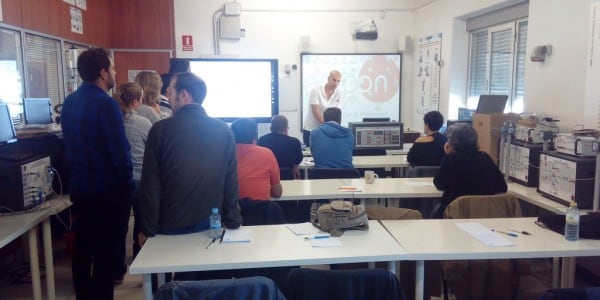
- Many students view results simultaneously. To view all results in real time in the classroom by means of a projector or an electronic whiteboard.
- Open Control, Multicontrol and Real Time Control. This unit allows intrinsically and/or extrinsically to change the span, gains, proportional, integral, derivative parameters, etc, in real time.
- The Computer Control System with SCADA and PID Control allow a real industrial simulation.
- This unit is totally safe as uses mechanical, electrical and electronic, and software safety devices.
- This unit can be used for doing applied research.
- This unit can be used for giving training courses to Industries even to other Technical Education Institutions.
- Control of the CPIC unit process through the control interface box without the computer.
- Visualization of all the sensors values used in the CPIC unit process.
- By using PLC-PI additional 19 more exercises can be done.
- Several other exercises can be done and designed by the user.
PERALATAN KOMPLEMENTER
Kontrol Proses (Katup Elektronik), Dikendalikan dari Komputer (PC)
Kontrol Proses (Katup Pneumatik), Dikendalikan dari Komputer (PC)
Kontrol Proses (Inverter Kecepatan), Dikendalikan dari Komputer (PC)
Kontrol Proses (Katup Elektrik + Pneumatik dan Inverter), Dikendalikan dari Komputer (PC)
Peralatan Pengendalian Proses untuk Studi Tekanan (Udara), Dikendalikan dari Komputer (PC)
KUALITAS
LAYANAN PURNA JUAL
Preferensi cookie